Milk Chocolate Cashews
What is Milk Chocolate Cashews?
Milk Chocolate Cashews are a snack food consisting of whole or pieces of cashew nuts coated in a layer of milk chocolate. Cashews are tree nuts, and milk chocolate is a confection made primarily from cocoa solids, cocoa butter, sugar, and milk solids.
Is Milk Chocolate Cashews vegan?
No. Milk Chocolate Cashews is animal-derived, so it is not vegan.
Is Milk Chocolate Cashews a major allergen?
This product contains milk and tree nuts (cashews), which are both major food allergens identified by the FDA.
What is Milk Chocolate Cashews used for?
This item is commonly consumed as a ready-to-eat snack or dessert.
Is Milk Chocolate Cashews safe?
Cashews are generally recognized as safe (GRAS) by the FDA.
Why it's used
This item is commonly consumed as a ready-to-eat snack or dessert. Manufacturers include it in snack mixes or sell it as a standalone treat for its combination of sweet, creamy chocolate flavor and the crunchy, rich taste of cashews.
Health notes
Cashews are generally recognized as safe (GRAS) by the FDA. Milk chocolate contains added sugars and saturated fat. The 2025-2030 Dietary Guidelines for Americans recommend no amount of added sugars, and suggest limiting intake to at most 10 grams per meal. They also advise keeping saturated fat intake to less than 10% of daily calories. JECFA has evaluated components found in milk chocolate, such as sugar and cocoa.
Allergen info
This product contains milk and tree nuts (cashews), which are both major food allergens identified by the FDA. It may also contain soy if soy lecithin is used in the milk chocolate formulation.
Foods that contain Milk Chocolate Cashews
Compare products →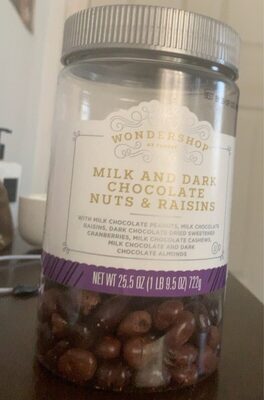 Target Stores
Milk And Dark Chocolate With Milk Chocolate Peanuts, Milk Chocolate Raisins, Dark Chocolate Dried Sweetened Cranberries, Milk Chocolate Cashews, Milk Chocolate And Dark Chocolate Almonds Nuts & Raisins, Milk And Dark Chocolate
High in saturated fat — 30% DV per serving
High in added sugars — 28% DV per serving
500kcal
9.5Protein
33.3Fat
52.4Carbs
Target Stores
Milk And Dark Chocolate With Milk Chocolate Peanuts, Milk Chocolate Raisins, Dark Chocolate Dried Sweetened Cranberries, Milk Chocolate Cashews, Milk Chocolate And Dark Chocolate Almonds Nuts & Raisins, Milk And Dark Chocolate
High in saturated fat — 30% DV per serving
High in added sugars — 28% DV per serving
500kcal
9.5Protein
33.3Fat
52.4Carbs
 Target Stores
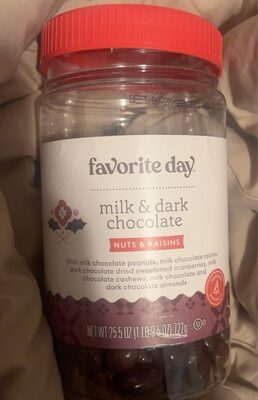
Milk & Dark Chocolate Nuts & Raisins With Milk Chocolate Peanuts, Milk Chocolate Raisins, Dark Chocolate Dried Sweetened Cranberries, Milk Chocolate Cashews, Milk Chocolate And Dark Chocolate Almonds, Milk & Dark Chocolate
High in saturated fat — 30% DV per serving
High in added sugars — 28% DV per serving
524kcal
9.5Protein
33.3Fat
52.4Carbs
Supervalu, Inc.
Roasted Salted Cashews, Butter Toffee Cashews & Milk Chocolate Cashews
553kcal
13.2Protein
39.5Fat
42.1Carbs
Target Stores
Milk & Dark Chocolate Nuts & Raisins With Milk Chocolate Peanuts, Milk Chocolate Raisins, Dark Chocolate Dried Sweetened Cranberries, Milk Chocolate Cashews, Milk Chocolate And Dark Chocolate Almonds, Milk & Dark Chocolate
High in saturated fat — 30% DV per serving
High in added sugars — 28% DV per serving
524kcal
9.5Protein
33.3Fat
52.4Carbs
Supervalu, Inc.
Roasted Salted Cashews, Butter Toffee Cashews & Milk Chocolate Cashews
553kcal
13.2Protein
39.5Fat
42.1Carbs
Auto-generated content. This description was generated automatically and is pending editorial review. Inaccuracies are possible. Found a mistake? Contact us.