Organic Espresso Beans
Auto-generated content. This description was generated automatically and is pending editorial review. Inaccuracies are possible. Found a mistake? Contact us.
What it is
Organic espresso beans are coffee beans that have been roasted using a method that creates a concentrated, intense coffee flavor. They are derived from the Coffea plant, typically the Arabica or Robusta species. The roasting process is key to developing the rich aroma and taste associated with espresso.
Why it's used
Manufacturers use organic espresso beans primarily for their strong coffee flavor and aroma, often as a flavoring agent. They are commonly found in chocolate confections, baked goods, and snack mixes where a coffee note is desired.
Health notes
Organic espresso beans are generally recognized as safe (GRAS) by the FDA for use as a food ingredient. The primary active compound is caffeine, which can have stimulant effects. Regulatory bodies like EFSA have evaluated caffeine and established guidance on safe consumption levels, though specific limits for food ingredients are not always set. Evidence suggests moderate caffeine intake is generally safe for most adults, but high intake can lead to anxiety, insomnia, and rapid heart rate.
Allergen info
Not a major allergen. Espresso beans are not derived from milk, egg, fish, shellfish, tree nuts, peanuts, wheat, soy, or sesame. They do not contain gluten.
Products containing Organic Espresso Beans
Compare products →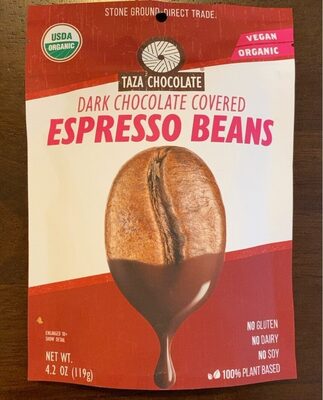 Taza Chocolate
Dark Chocolate Covered Espresso Beans, Dark Chocolate
High in saturated fat — 25% DV per serving
536kcal
7.1Protein
32.1Fat
60.7Carbs
K'ul Foods LLC
Espresso & Cacao Nibs 70% Organic Dark Chocolate, Espresso & Cacao Nibs
High in saturated fat — 40% DV per serving
High in added sugars — 22% DV per serving
475kcal
7.5Protein
35Fat
47.5Carbs
Target Stores
Espresso Beans 60% Cacao Dark Chocolate, Espresso Beans
High in saturated fat — 55% DV per serving
558kcal
7.0Protein
41.9Fat
37.2Carbs
Taza Chocolate
Dark Chocolate Covered Espresso Beans, Dark Chocolate
High in saturated fat — 25% DV per serving
536kcal
7.1Protein
32.1Fat
60.7Carbs
K'ul Foods LLC
Espresso & Cacao Nibs 70% Organic Dark Chocolate, Espresso & Cacao Nibs
High in saturated fat — 40% DV per serving
High in added sugars — 22% DV per serving
475kcal
7.5Protein
35Fat
47.5Carbs
Target Stores
Espresso Beans 60% Cacao Dark Chocolate, Espresso Beans
High in saturated fat — 55% DV per serving
558kcal
7.0Protein
41.9Fat
37.2Carbs