Organic Tri Color Quinoa
What is Organic Tri Color Quinoa?
Organic tri-color quinoa is a blend of three varieties of quinoa seeds, typically white, red, and black. Quinoa is a flowering plant in the amaranth family, grown for its edible seeds. The seeds are harvested, cleaned, and often lightly processed to remove the natural saponin coating before packaging.
Is Organic Tri Color Quinoa vegan?
Organic Tri Color Quinoa is not animal-derived. Products that contain it can still include other animal-derived ingredients, so check the full ingredient list.
Is Organic Tri Color Quinoa gluten-free?
It is also naturally gluten-free.
Is Organic Tri Color Quinoa a major allergen?
Quinoa is not one of the nine major allergens recognized by the FDA.
What is Organic Tri Color Quinoa used for?
Quinoa is used as a nutritious grain substitute or addition in various dishes.
Is Organic Tri Color Quinoa safe?
Quinoa is generally recognized as safe (GRAS) by the FDA for food use.
Why it's used
Quinoa is used as a nutritious grain substitute or addition in various dishes. Manufacturers add it to packaged foods for its texture, mild nutty flavor, and nutritional profile. It's commonly found in grain blends, salads, soups, and side dishes.
Health notes
Quinoa is generally recognized as safe (GRAS) by the FDA for food use. It is a good source of protein, fiber, and various micronutrients. While no specific health concerns are associated with typical consumption, it is a carbohydrate-rich food. JECFA and EFSA have evaluated quinoa as a foodstuff.
Allergen info
Quinoa is not one of the nine major allergens recognized by the FDA. It is also naturally gluten-free.
Foods that contain Organic Tri Color Quinoa
Compare products →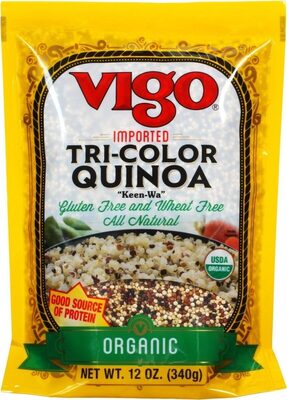 Vigo Importing Company
Organic Tri-Color Quinoa
372kcal
13.9Protein
5.8Fat
65.1Carbs
Vigo Importing Company
Organic Tri-Color Quinoa
372kcal
13.9Protein
5.8Fat
65.1Carbs
 H2oh!, LLC.
Superfoods Tri-Color Organic Quinoa
365kcal
12.5Protein
6.2Fat
64.6Carbs
Harris-Teeter Inc.
Tricolor Quinoa, Tricolor
378kcal
13.3Protein
5.6Fat
64.4Carbs
Global Juices and Fruits, LLC
Organic Super Grain Blend
367kcal
12.2Protein
4.1Fat
69.4Carbs
H2oh!, LLC.
Superfoods Tri-Color Organic Quinoa
365kcal
12.5Protein
6.2Fat
64.6Carbs
Harris-Teeter Inc.
Tricolor Quinoa, Tricolor
378kcal
13.3Protein
5.6Fat
64.4Carbs
Global Juices and Fruits, LLC
Organic Super Grain Blend
367kcal
12.2Protein
4.1Fat
69.4Carbs
Learn more
Auto-generated content. This description was generated automatically and is pending editorial review. Inaccuracies are possible. Found a mistake? Contact us.