Packed In Hog Casings
What is Packed In Hog Casings?
Hog casings are the cleaned intestines of pigs, typically the small intestine. They are processed, salted, and sometimes treated to be used as natural casings for sausages and hot dogs. This traditional method gives the final product its characteristic shape and a satisfying 'snap' when bitten.
Is Packed In Hog Casings vegan?
No. Packed In Hog Casings is animal-derived, so it is not vegan.
Is Packed In Hog Casings gluten-free?
They do not contain gluten.
Is Packed In Hog Casings a major allergen?
Hog casings are not derived from any of the 9 FDA major allergens.
What is Packed In Hog Casings used for?
Manufacturers use hog casings primarily to hold ground meat mixtures together during cooking and to provide a desirable texture.
Is Packed In Hog Casings safe?
Hog casings are considered a food ingredient and are not subject to FDA additive regulations.
Why it's used
Manufacturers use hog casings primarily to hold ground meat mixtures together during cooking and to provide a desirable texture. They are essential for producing many types of sausages, hot dogs, and bratwurst, giving them their familiar form and a pleasant bite. The casing also helps retain moisture and flavor during the cooking process.
Health notes
Hog casings are considered a food ingredient and are not subject to FDA additive regulations. They are a natural product and do not have specific ADIs or upper intake levels set by international bodies like JECFA or EFSA. As a traditional food component, they are generally recognized as safe when consumed as part of a balanced diet.
Allergen info
Hog casings are not derived from any of the 9 FDA major allergens. They do not contain gluten.
Foods that contain Packed In Hog Casings
Compare products →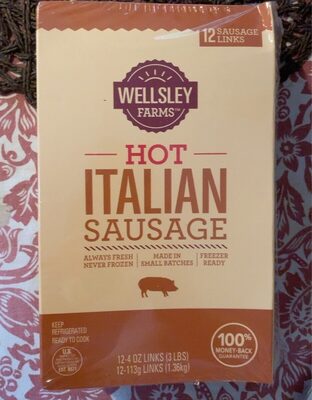 BJ's Wholesale Club / Corporate Brands
Hot Italian Sausage, Hot Italian
High in sodium — 40% DV per serving
High in saturated fat — 40% DV per serving
High in cholesterol — 23% DV per serving
257kcal
15.9Protein
21.2Fat
0.9Carbs
Genuine Pork Sweet Italian Sausage
247kcal
16.5Protein
18.8Fat
1.2Carbs
C. W. Brown Foods, Inc.
Spicy Italian Sausage, Spicy Italian
High in sodium — 30% DV per serving
High in saturated fat — 30% DV per serving
247kcal
16.5Protein
18.8Fat
1.2Carbs
Fuller Life Water Co.
Jalapeno Cheedar Venison & Beef Primal Dogs Smoked Sausages, Jalapeno Cheddar
High in sodium — 45% DV per serving
High in saturated fat — 40% DV per serving
High in cholesterol — 28% DV per serving
230kcal
19.5Protein
15.9Fat
2.6Carbs
BJ's Wholesale Club / Corporate Brands
Hot Italian Sausage, Hot Italian
High in sodium — 40% DV per serving
High in saturated fat — 40% DV per serving
High in cholesterol — 23% DV per serving
257kcal
15.9Protein
21.2Fat
0.9Carbs
Genuine Pork Sweet Italian Sausage
247kcal
16.5Protein
18.8Fat
1.2Carbs
C. W. Brown Foods, Inc.
Spicy Italian Sausage, Spicy Italian
High in sodium — 30% DV per serving
High in saturated fat — 30% DV per serving
247kcal
16.5Protein
18.8Fat
1.2Carbs
Fuller Life Water Co.
Jalapeno Cheedar Venison & Beef Primal Dogs Smoked Sausages, Jalapeno Cheddar
High in sodium — 45% DV per serving
High in saturated fat — 40% DV per serving
High in cholesterol — 28% DV per serving
230kcal
19.5Protein
15.9Fat
2.6Carbs
Auto-generated content. This description was generated automatically and is pending editorial review. Inaccuracies are possible. Found a mistake? Contact us.