Pastina Pasta
What is Pastina Pasta?
Pastina is a category of tiny pasta shapes, often smaller than traditional pasta like spaghetti or penne. The name 'pastina' means 'little pasta' in Italian. It is typically made from durum wheat semolina and water, similar to other pasta, but is milled finer and cut into very small shapes.
Is Pastina Pasta vegan?
Pastina Pasta is not animal-derived. Products that contain it can still include other animal-derived ingredients, so check the full ingredient list.
Is Pastina Pasta gluten-free?
It contains gluten.
Is Pastina Pasta a major allergen?
Pastina is made from wheat, which is one of the 9 FDA major allergens.
What is Pastina Pasta used for?
Pastina is often used in soups and broths, where its small size makes it easy to eat and cook quickly.
Is Pastina Pasta safe?
Pastina is a grain product and a source of carbohydrates.
Why it's used
Pastina is often used in soups and broths, where its small size makes it easy to eat and cook quickly. It can also be served as a simple side dish, sometimes with butter or cheese. Manufacturers use it as a carbohydrate base and a textural element in prepared foods.
Health notes
Pastina is a grain product and a source of carbohydrates. It is not subject to specific FDA regulations beyond those for pasta products. Like other refined grains, it is lower in fiber and some nutrients compared to whole grains. There are no widespread health controversies associated with typical consumption of pastina.
Allergen info
Pastina is made from wheat, which is one of the 9 FDA major allergens. It contains gluten.
Foods that contain Pastina Pasta
Compare products →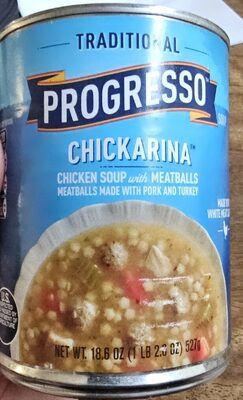 GENERAL MILLS SALES INC.
Progresso Traditional Chickarina Soup
High in sodium — 28% DV per serving
51kcal
3.0Protein
1.9Fat
5.9Carbs
GENERAL MILLS SALES INC.
Progresso Traditional Chickarina Soup
High in sodium — 28% DV per serving
51kcal
3.0Protein
1.9Fat
5.9Carbs
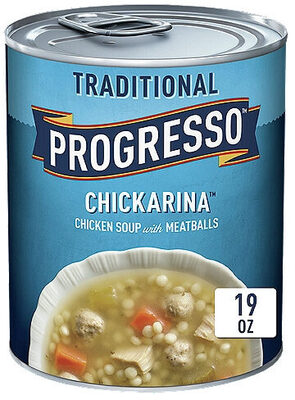 GENERAL MILLS SALES INC.
Progresso Traditional Chickarina Soup
High in sodium — 63% DV per serving
52kcal
3.2Protein
1.9Fat
5.8Carbs
GENERAL MILLS SALES INC.
Progresso Traditional Chickarina Soup
High in sodium — 63% DV per serving
52kcal
3.2Protein
1.9Fat
5.8Carbs
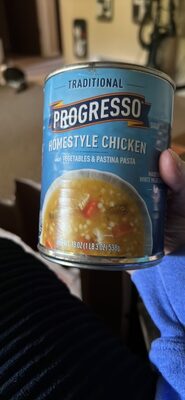 GENERAL MILLS SALES INC.
Progresso Traditional Homestyle Chicken Soup
High in sodium — 27% DV per serving
33kcal
2.1Protein
0Fat
5.8Carbs
GENERAL MILLS SALES INC.
Progresso Traditional Homestyle Chicken Soup
High in sodium — 27% DV per serving
33kcal
2.1Protein
0Fat
5.8Carbs
Learn more
Auto-generated content. This description was generated automatically and is pending editorial review. Inaccuracies are possible. Found a mistake? Contact us.