Pepperoni Topping
What is Pepperoni Topping?
Pepperoni topping is a spicy salami, traditionally made from cured pork and beef, seasoned with paprika or other chili pepper. It is finely ground and typically used as a pizza topping. Plant-based versions, made from ingredients like soy or pea protein, are also available.
Is Pepperoni Topping a major allergen?
Traditional pepperoni is not a major allergen.
What is Pepperoni Topping used for?
Manufacturers add pepperoni topping primarily for its distinct savory and spicy flavor, as well as its chewy texture.
Is Pepperoni Topping safe?
Pepperoni is a food product, not a food additive, and is regulated as such by the FDA.
Why it's used
Manufacturers add pepperoni topping primarily for its distinct savory and spicy flavor, as well as its chewy texture. It is most commonly found as a topping on pizzas, but can also be used in sandwiches, pasta dishes, and other savory baked goods.
Health notes
Pepperoni is a food product, not a food additive, and is regulated as such by the FDA. Traditional pepperoni can be high in sodium and saturated fat. The International Agency for Research on Cancer (IARC) classifies processed meat, which includes pepperoni, as carcinogenic to humans (Group 1), based on sufficient evidence that consumption causes colorectal cancer. JECFA and EFSA typically evaluate food additives and have not specifically evaluated pepperoni as an ingredient in this context.
Allergen info
Traditional pepperoni is not a major allergen. However, some pepperoni products, especially plant-based versions, may contain common allergens such as soy or wheat. Always check the specific product label for allergen information.
Foods that contain Pepperoni Topping
Compare products →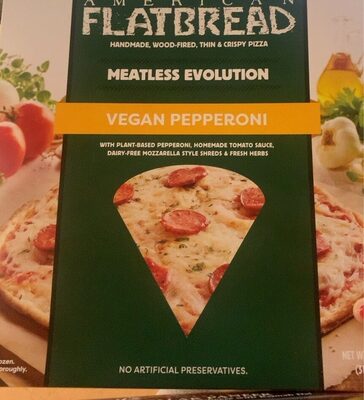 American Flatbread
Vegan Pepperoni With Plant-Based Pepperoni, Homemade Tomato Sauce, Dairy-Free Mozzarella Style Shreds & Fresh Herbs Handmade, Wood-Fired, Thin & Crispy Pizza, Vegan Pepperoni
High in sodium — 29% DV per serving
208kcal
5.7Protein
6.6Fat
32.1Carbs
American Flatbread
Vegan Pepperoni With Plant-Based Pepperoni, Homemade Tomato Sauce, Dairy-Free Mozzarella Style Shreds & Fresh Herbs Handmade, Wood-Fired, Thin & Crispy Pizza, Vegan Pepperoni
High in sodium — 29% DV per serving
208kcal
5.7Protein
6.6Fat
32.1Carbs
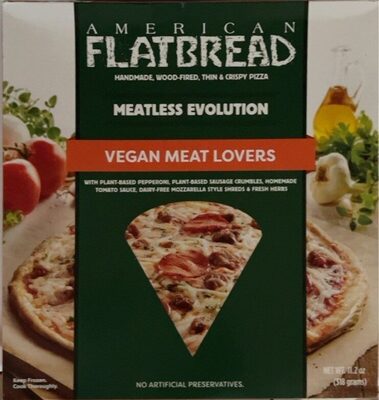 American Flatbread
Vegan Meat Lovers With Plant-Based Pepperoni, Plant-Based Sausage Crumbles, Homemade Tomato Sauce, Dairy-Free Mozzarella Style Shreds & Fresh Herbs Handmade, Wood-Fried, Thin & Crispy Pizza, Vegan Meat Lovers
High in sodium — 28% DV per serving
208kcal
6.6Protein
6.6Fat
32.1Carbs
American Flatbread
Plant-Based Supreme With Plant-Based Pepperoni, Broccoli, Mushrooms, Homemade Tomato Sauce, Mozzarella, Asiago, Feta & Fresh Herbs Handmade, Wood-Fired, Thin & Crispy Pizza, Plant-Based Supreme
High in sodium — 29% DV per serving
212kcal
8.8Protein
8.0Fat
26.6Carbs
American Flatbread
Plant-Based Pepperoni With Plant-Based Pepperoni, Homemade Tomato Sauce, Mozzarella, Asiago, Parmesan & Fresh Herbs Handmade, Wood-Fired, Thin & Crispy Pizza, Plant-Based Pepperoni
High in sodium — 28% DV per serving
217kcal
9.4Protein
7.5Fat
28.3Carbs
American Flatbread
Vegan Meat Lovers With Plant-Based Pepperoni, Plant-Based Sausage Crumbles, Homemade Tomato Sauce, Dairy-Free Mozzarella Style Shreds & Fresh Herbs Handmade, Wood-Fried, Thin & Crispy Pizza, Vegan Meat Lovers
High in sodium — 28% DV per serving
208kcal
6.6Protein
6.6Fat
32.1Carbs
American Flatbread
Plant-Based Supreme With Plant-Based Pepperoni, Broccoli, Mushrooms, Homemade Tomato Sauce, Mozzarella, Asiago, Feta & Fresh Herbs Handmade, Wood-Fired, Thin & Crispy Pizza, Plant-Based Supreme
High in sodium — 29% DV per serving
212kcal
8.8Protein
8.0Fat
26.6Carbs
American Flatbread
Plant-Based Pepperoni With Plant-Based Pepperoni, Homemade Tomato Sauce, Mozzarella, Asiago, Parmesan & Fresh Herbs Handmade, Wood-Fired, Thin & Crispy Pizza, Plant-Based Pepperoni
High in sodium — 28% DV per serving
217kcal
9.4Protein
7.5Fat
28.3Carbs
Auto-generated content. This description was generated automatically and is pending editorial review. Inaccuracies are possible. Found a mistake? Contact us.