Preservative Sodium Ascorbate
What is Preservative Sodium Ascorbate?
Sodium ascorbate is the sodium salt of vitamin C (ascorbic acid). It is produced when ascorbic acid is neutralized with a sodium-containing base, such as sodium bicarbonate or sodium hydroxide. It is often manufactured industrially.
Is Preservative Sodium Ascorbate vegan?
Preservative Sodium Ascorbate is not animal-derived. Products that contain it can still include other animal-derived ingredients, so check the full ingredient list.
Is Preservative Sodium Ascorbate gluten-free?
Sodium ascorbate is not derived from any of the 9 major allergens and does not contain gluten.
What is Preservative Sodium Ascorbate used for?
Sodium ascorbate is used as an antioxidant to preserve food and prevent spoilage by inhibiting oxidation.
Is Preservative Sodium Ascorbate safe?
Sodium ascorbate is generally recognized as safe (GRAS) by the FDA when used as a food additive.
Why it's used
Sodium ascorbate is used as an antioxidant to preserve food and prevent spoilage by inhibiting oxidation. It helps maintain the color and flavor of processed foods. It is commonly found in cured meats, baked goods, and dried fruits.
Health notes
Sodium ascorbate is generally recognized as safe (GRAS) by the FDA when used as a food additive. It is a source of vitamin C, which is an essential nutrient. JECFA and EFSA have evaluated sodium ascorbate and found it to be safe for consumption. High doses of vitamin C can cause digestive upset in some individuals, but this is not typically seen with levels found in food.
Allergen info
Sodium ascorbate is not derived from any of the 9 major allergens and does not contain gluten.
Foods that contain Preservative Sodium Ascorbate
Compare products →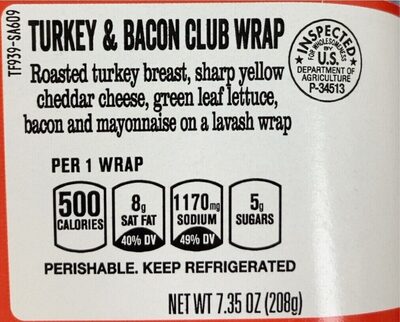 Taylor Fresh Foods, Inc.
Turkey & Bacon Roasted Turkey Breast, Sharp Yellow Cheddar Cheese, Green Leaf Lettuce, Bacon And Mayonnaise On A Lavash Club Wrap, Turkey & Bacon
High in sodium — 51% DV per serving
High in saturated fat — 40% DV per serving
240kcal
15.4Protein
13.0Fat
16.4Carbs
Ahold USA, Inc.
Spinach Salad With Bacon Spinach, Bacon Topping, Sweetened Dried Cranberries. Diced Parmesan Cheese With Balsamic Vinaigrette, Spinach Salad With Bacon
High in sodium — 30% DV per serving
High in saturated fat — 25% DV per serving
215kcal
9.6Protein
12.6Fat
16.3Carbs
Taylor Fresh Foods, Inc.
Cobb Salad With Chicken & Bacon Dressing, Cobb Salad With Chicken & Bacon
High in cholesterol — 22% DV per serving
150kcal
8Protein
11Fat
3Carbs
Taylor Fresh Foods, Inc.
Turkey & Bacon Roasted Turkey Breast, Sharp Yellow Cheddar Cheese, Green Leaf Lettuce, Bacon And Mayonnaise On A Lavash Club Wrap, Turkey & Bacon
High in sodium — 51% DV per serving
High in saturated fat — 40% DV per serving
240kcal
15.4Protein
13.0Fat
16.4Carbs
Ahold USA, Inc.
Spinach Salad With Bacon Spinach, Bacon Topping, Sweetened Dried Cranberries. Diced Parmesan Cheese With Balsamic Vinaigrette, Spinach Salad With Bacon
High in sodium — 30% DV per serving
High in saturated fat — 25% DV per serving
215kcal
9.6Protein
12.6Fat
16.3Carbs
Taylor Fresh Foods, Inc.
Cobb Salad With Chicken & Bacon Dressing, Cobb Salad With Chicken & Bacon
High in cholesterol — 22% DV per serving
150kcal
8Protein
11Fat
3Carbs
Learn more
Auto-generated content. This description was generated automatically and is pending editorial review. Inaccuracies are possible. Found a mistake? Contact us.