Red Sanding Sugar: Sugar
Auto-generated content. This description was generated automatically and is pending editorial review. Inaccuracies are possible. Found a mistake? Contact us.
What it is
Red sanding sugar is a type of decorative sugar that has been colored red. It is made from granulated sugar, which is a carbohydrate primarily derived from sugar cane or sugar beets. The sugar is extracted, purified, and crystallized, then coated with a red food coloring.
Why it's used
Red sanding sugar is primarily used for decorative purposes to add visual appeal and a sweet crunch to baked goods, candies, and desserts. As a form of sugar, it also contributes sweetness, bulk, and texture to foods.
Health notes
Sugar (sucrose) is generally recognized as safe (GRAS) by the FDA. However, the Dietary Guidelines for Americans (2025-2030) recommend no amount of added sugars, and at most 10 grams per meal. The World Health Organization (WHO) advises that free sugars should make up less than 10% of total energy intake. High consumption of added sugars is associated with increased risk of obesity, type 2 diabetes, and dental cavities. JECFA and EFSA have evaluated sugars in the context of overall diet. For the red color, if it is a petroleum-based synthetic dye, the FDA announced in April 2025 a plan to phase out such dyes, including Red 40, Yellow 5, and Yellow 6.
Allergen info
Not a major allergen.
Products containing Red Sanding Sugar: Sugar
Compare products →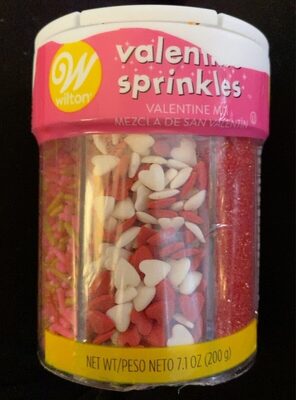 Wilton Industries Inc.
Valentine Mix
375kcal
0Protein
0Fat
100Carbs
Wilton Industries Inc.
Valentine Mix
375kcal
0Protein
0Fat
100Carbs
 Wilton Industries Inc.
Gingerbread Holiday Town Kit, Gingerbread
High in added sugars — 30% DV per serving
400kcal
3.3Protein
10Fat
70Carbs
Target Stores
Pride Parade Float Cookie Kit, Pride Parade Float
High in added sugars — 30% DV per serving
400kcal
3.3Protein
10Fat
73.3Carbs
Wilton Industries Inc.
Gingerbread Holiday Town Kit, Gingerbread
High in added sugars — 30% DV per serving
400kcal
3.3Protein
10Fat
70Carbs
Target Stores
Pride Parade Float Cookie Kit, Pride Parade Float
High in added sugars — 30% DV per serving
400kcal
3.3Protein
10Fat
73.3Carbs
 Target Stores
Valentine's House Cookie Kit, Valentine's House
High in added sugars — 30% DV per serving
400kcal
3.3Protein
10Fat
73.3Carbs
Target Stores
Valentine's House Cookie Kit, Valentine's House
High in added sugars — 30% DV per serving
400kcal
3.3Protein
10Fat
73.3Carbs