Salt Or Sea Salt
Auto-generated content. This description was generated automatically and is pending editorial review. Inaccuracies are possible. Found a mistake? Contact us.
What it is
Salt, also known as sodium chloride, is a mineral composed of sodium and chloride ions. It is naturally found in seawater and underground rock formations, from which it is extracted through mining or evaporation. Sea salt is produced by evaporating seawater, retaining trace minerals that give it a slightly different flavor and texture compared to table salt.
Why it's used
Manufacturers add salt primarily as a flavor enhancer, making foods taste better and more savory. It also acts as a preservative by drawing out moisture, which inhibits the growth of bacteria and molds in foods like cured meats, pickles, and fermented vegetables. Additionally, salt can affect the texture of foods, such as in bread making or cheese production.
Health notes
Salt is generally recognized as safe (GRAS) by the FDA. While sodium is an essential nutrient for proper bodily function, high intake is a public health concern. The FDA's Daily Value for sodium is 2,300 mg, and consuming too much sodium is linked to increased blood pressure in some individuals. JECFA has evaluated salt, and its safety is well-established at appropriate intake levels.
Allergen info
Not a major allergen.
Products containing Salt Or Sea Salt
Compare products →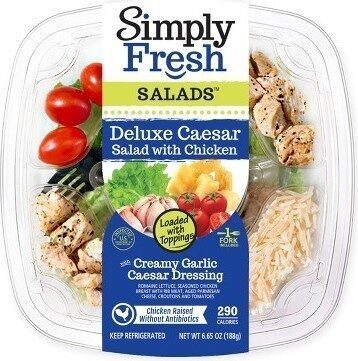 Five Star Gourmet Foods Inc.
Deluxe Caesar With Chicken Salad With Creamy Garlic Caesar Dressing, Deluxe Caesar With Chicken
High in sodium — 32% DV per serving
High in saturated fat — 22% DV per serving
154kcal
8.0Protein
10.1Fat
7.5Carbs
Five Star Gourmet Foods Inc.
Deluxe Caesar With Chicken Salad With Creamy Garlic Caesar Dressing, Deluxe Caesar With Chicken
High in sodium — 32% DV per serving
High in saturated fat — 22% DV per serving
154kcal
8.0Protein
10.1Fat
7.5Carbs
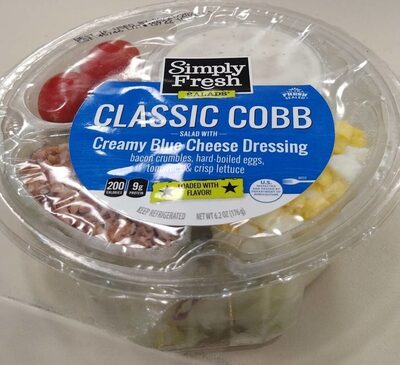 Uniq Vending, LLC.
Classic Cobb Salad With Creamy Blue Cheese Dressing, Classic Cobb
High in sodium — 29% DV per serving
High in cholesterol — 30% DV per serving
108kcal
5.1Protein
8.0Fat
4.0Carbs
Uniq Vending, LLC.
Classic Cobb Salad With Creamy Blue Cheese Dressing, Classic Cobb
High in sodium — 29% DV per serving
High in cholesterol — 30% DV per serving
108kcal
5.1Protein
8.0Fat
4.0Carbs
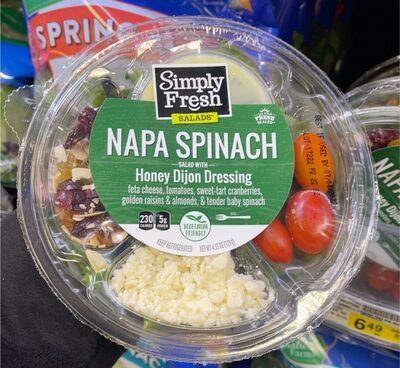 Uniq Vending, LLC.
Napa Spinach Salad With Honey Dijon Dressing, Napa Spinach
High in sodium — 21% DV per serving
178kcal
3.9Protein
10.8Fat
17.1Carbs
Eaux de Vie, Inc.
Napa With Honey Dijon Dressing Salads, Napa Honey Dijon
High in sodium — 23% DV per serving
High in saturated fat — 20% DV per serving
192kcal
4Protein
12Fat
17.6Carbs
Eaux de Vie, Inc.
Chicken Caesar Grilled Chicken Breast With Rib Meat, Seasoned Croutons & Crisp Romaine Lettuce With Lemon Romano Dressing Salads, Chicken Caesar
High in sodium — 38% DV per serving
106kcal
5.3Protein
5.9Fat
7.1Carbs
Uniq Vending, LLC.
Napa Spinach Salad With Honey Dijon Dressing, Napa Spinach
High in sodium — 21% DV per serving
178kcal
3.9Protein
10.8Fat
17.1Carbs
Eaux de Vie, Inc.
Napa With Honey Dijon Dressing Salads, Napa Honey Dijon
High in sodium — 23% DV per serving
High in saturated fat — 20% DV per serving
192kcal
4Protein
12Fat
17.6Carbs
Eaux de Vie, Inc.
Chicken Caesar Grilled Chicken Breast With Rib Meat, Seasoned Croutons & Crisp Romaine Lettuce With Lemon Romano Dressing Salads, Chicken Caesar
High in sodium — 38% DV per serving
106kcal
5.3Protein
5.9Fat
7.1Carbs