Salted Almonds: Almonds
Auto-generated content. This description was generated automatically and is pending editorial review. Inaccuracies are possible. Found a mistake? Contact us.
What it is
Almonds are the edible seeds of the almond tree, native to the Middle East and South Asia. They are typically harvested in late summer and fall, then processed to remove the outer hull and shell. Almonds can be eaten raw, roasted, or processed into almond butter, almond milk, or almond flour.
Why it's used
Almonds are often added to foods for their flavor, texture, and nutritional value. They are commonly found in snack mixes, baked goods, cereals, and confectionery. Manufacturers use them to provide a satisfying crunch and a rich, nutty taste.
Health notes
Almonds are a source of healthy fats, fiber, protein, and various vitamins and minerals. The US FDA recognizes almonds as Generally Recognized As Safe (GRAS). Regulatory bodies like the European Food Safety Authority (EFSA) have evaluated almonds, noting their nutritional benefits. While generally considered healthy, they are calorie-dense, and portion control is often advised.
Allergen info
Almonds are one of the nine FDA major allergens (tree nuts). They do not contain gluten.
Products containing Salted Almonds: Almonds
Compare products →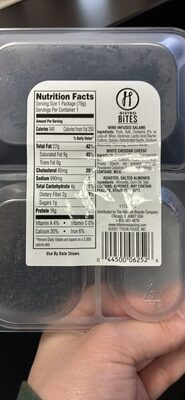 The Hillshire Brands Company
Wine-Infused Salame, White Cheddar Cheese, Salted Almonds, -Bistro- Bites, Wine-Infused Salame, White Cheddar, Cheese Salted Almonds,
High in sodium — 43% DV per serving
High in saturated fat — 45% DV per serving
High in cholesterol — 20% DV per serving
430kcal
20.2Protein
34.2Fat
5.1Carbs
The Hillshire Brands Company
Wine-Infused Salame, White Cheddar Cheese, Salted Almonds, -Bistro- Bites, Wine-Infused Salame, White Cheddar, Cheese Salted Almonds,
High in sodium — 43% DV per serving
High in saturated fat — 45% DV per serving
High in cholesterol — 20% DV per serving
430kcal
20.2Protein
34.2Fat
5.1Carbs