Stuffed In Beef Collagen Casings
Auto-generated content. This description was generated automatically and is pending editorial review. Inaccuracies are possible. Found a mistake? Contact us.
What it is
Collagen casings are made from collagen, a protein found in animal connective tissues, primarily from cattle or pigs. The collagen is extracted, purified, and then formed into a tubular casing. These casings are used to encase processed meat products, like sausages or snack sticks, before cooking and packaging.
Why it's used
Collagen casings are used as a functional ingredient in processed meats, providing a uniform shape and a "bite" that consumers expect. They are often edible and can be consumed with the product. They are commonly found in sausages, hot dogs, and snack sticks.
Health notes
Collagen casings are generally recognized as safe (GRAS) by the FDA for use in food. They are primarily protein and are digested like other dietary proteins. International bodies like JECFA have evaluated collagen and its derivatives. There are no widespread health controversies associated with their typical consumption.
Allergen info
Collagen casings are derived from animal sources (typically beef or pork) and are not one of the 9 FDA major allergens. They do not contain gluten.
Products containing Stuffed In Beef Collagen Casings
Compare products →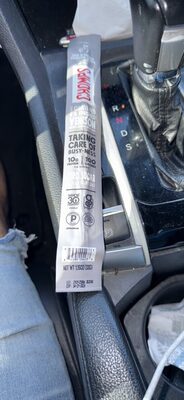 We Are The Chompians LLC
Cracked Pepper & Sea Salt Grass Fed Venison Snack Stick With Grass Fed Beef Added, Cracked Pepper & Sea Salt
312kcal
28.1Protein
18.8Fat
0Carbs
Tyson Foods Inc.
Jimmy Dean Raw Pork Sausage Casing Links
High in sodium — 27% DV per serving
High in saturated fat — 80% DV per serving
High in cholesterol — 27% DV per serving
470kcal
10Protein
46Fat
2Carbs
Tyson Foods Inc.
Jimmy Dean Raw Pure Pork Sausage Casing Links, 3.75 Inch, 1.0 oz,
High in sodium — 26% DV per serving
High in saturated fat — 75% DV per serving
High in cholesterol — 25% DV per serving
460kcal
11Protein
45.5Fat
2Carbs
We Are The Chompians LLC
Cracked Pepper & Sea Salt Grass Fed Venison Snack Stick With Grass Fed Beef Added, Cracked Pepper & Sea Salt
312kcal
28.1Protein
18.8Fat
0Carbs
Tyson Foods Inc.
Jimmy Dean Raw Pork Sausage Casing Links
High in sodium — 27% DV per serving
High in saturated fat — 80% DV per serving
High in cholesterol — 27% DV per serving
470kcal
10Protein
46Fat
2Carbs
Tyson Foods Inc.
Jimmy Dean Raw Pure Pork Sausage Casing Links, 3.75 Inch, 1.0 oz,
High in sodium — 26% DV per serving
High in saturated fat — 75% DV per serving
High in cholesterol — 25% DV per serving
460kcal
11Protein
45.5Fat
2Carbs