Auto-generated content.
This description was generated automatically and is pending editorial review.
Inaccuracies are possible. Found a mistake? Contact us.
Source
Not animal-derived
Allergen
No
Role in food
Manufacturers use lemon puree to add a bright, tart, and fresh citrus flavor to …
What it is
Lemon puree is made from whole lemons that have been processed to create a smooth, liquid or semi-liquid paste. It typically includes the juice, pulp, and sometimes the zest of the fruit, offering a concentrated lemon flavor and aroma.
Why it's used
Manufacturers use lemon puree to add a bright, tart, and fresh citrus flavor to a wide variety of foods. It is commonly found in baked goods like cakes and cookies, candies, beverages, and sauces, where it can also contribute moisture and a natural tang.
Health notes
Lemon puree is generally recognized as safe (GRAS) by the FDA when used as a food ingredient. It is a natural source of vitamin C and other antioxidants. Regulatory bodies like JECFA and EFSA have evaluated citric acid, a component of lemon, but specific evaluations for lemon puree itself are not widely published. At typical consumption levels, it is not associated with adverse health effects.
Allergen info
Lemon puree is not derived from any of the nine FDA major allergens. It does not contain gluten.
Note:
This site presents label data from USDA FoodData Central for general information. It is not medical advice.
Check the package label; formulations change.
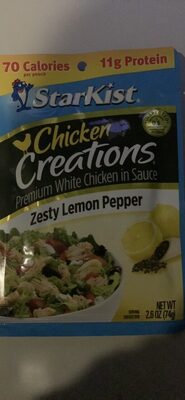 StarKist Co.
Zesty Lemon Pepper Premium In Sauce White Chicken, Lemon; Pepper
95kcal
14.9Protein
2.7Fat
2.7Carbs
StarKist Co.
Zesty Lemon Pepper Premium In Sauce White Chicken, Lemon; Pepper
95kcal
14.9Protein
2.7Fat
2.7Carbs