Us Certified Colors
Auto-generated content. This description was generated automatically and is pending editorial review. Inaccuracies are possible. Found a mistake? Contact us.
What it is
US Certified Colors are synthetic substances added to foods, drugs, and cosmetics to impart color. They are manufactured chemicals, not derived from natural sources, and are subject to strict approval and certification processes by the U.S. Food and Drug Administration (FDA). Each batch of these colors must be tested by the FDA before it can be used in products.
Why it's used
Manufacturers add US Certified Colors to make foods more visually appealing, enhance natural colors, or provide color to otherwise colorless foods. They are commonly found in a wide range of processed foods, including candies, baked goods, snack foods, beverages, and cereals.
Health notes
US Certified Colors are approved by the FDA as color additives for use in food. In January 2025, the FDA revoked the use of Red 3 for food. In April 2025, the FDA announced a plan to phase out other petroleum-based synthetic dyes, including Red 40, Yellow 5, Yellow 6, Blue 1, Blue 2, Green 3, Citrus Red 2, and Orange B. Some studies have suggested a link between synthetic food dyes and hyperactivity in some children, while other studies have not found a consistent link; the evidence is mixed. The FDA states that for most children, food dyes do not affect behavior, but for a small subset of children, they may. Individual certified colors have been evaluated by international bodies like JECFA and EFSA.
Allergen info
Not a major allergen.
Products containing Us Certified Colors
Compare products →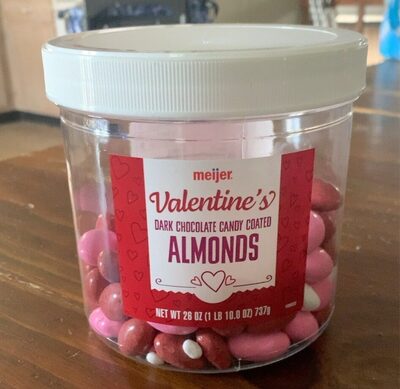 Meijer, Inc.
Dark Chocolate Candy Coated Valentine's Almonds, Dark Chocolate Candy
High in saturated fat — 20% DV per serving
High in added sugars — 28% DV per serving
467kcal
6.7Protein
30Fat
56.7Carbs
Meijer, Inc.
Dark Chocolate Candy Coated Valentine's Almonds, Dark Chocolate Candy
High in saturated fat — 20% DV per serving
High in added sugars — 28% DV per serving
467kcal
6.7Protein
30Fat
56.7Carbs