Auto-generated content.
This description was generated automatically and is pending editorial review.
Inaccuracies are possible. Found a mistake? Contact us.
Source
Not animal-derived
Allergen
No
Role in food
Vinegar is primarily used to add a tart, acidic flavor to foods. It acts …
What it is
Vinegar is a sour liquid made from the fermentation of ethanol by acetic acid bacteria. This process typically starts with a carbohydrate source like grains, fruits, or vegetables, which is first fermented into alcohol and then further fermented into acetic acid. The resulting liquid has a sharp, pungent flavor and aroma.
Why it's used
Vinegar is primarily used to add a tart, acidic flavor to foods. It acts as a preservative in pickles and relishes, and is a key ingredient in salad dressings, marinades, and sauces. Its acidity also helps to tenderize meats and balance the sweetness in some dishes.
Health notes
Vinegar is generally recognized as safe (GRAS) by the FDA when used as a food ingredient. Acetic acid, the main component of vinegar, has been studied for its potential effects on blood sugar and appetite, though results are mixed and more research is needed. JECFA and EFSA have evaluated vinegar and its components. At typical dietary levels, it is not associated with adverse health effects.
Allergen info
Vinegar is not derived from any of the 9 FDA major allergens. It does not contain gluten unless it is specifically made from gluten-containing grains and not purified.
Note:
This site presents label data from USDA FoodData Central for general information. It is not medical advice.
Check the package label; formulations change.
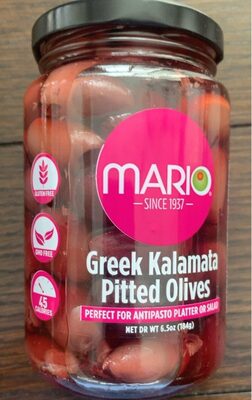 Mario Camacho Foods LLC
Pitted Kalamata Mediterranean Olives, Pitted Kalamata
333kcal
0Protein
33.3Fat
8.3Carbs
Mario Camacho Foods LLC
Pitted Kalamata Mediterranean Olives, Pitted Kalamata
333kcal
0Protein
33.3Fat
8.3Carbs