White Cheddar Cheese: Cheddar Cheese
Auto-generated content. This description was generated automatically and is pending editorial review. Inaccuracies are possible. Found a mistake? Contact us.
What it is
White cheddar cheese is a firm, natural cheese made from cow's milk. It gets its 'white' color because no artificial colorants, such as annatto, are added during its production, unlike orange cheddar. The cheese is produced by curdling milk, pressing the curds, and then aging them for varying periods to develop its characteristic flavor and texture.
Why it's used
White cheddar cheese is primarily used for its savory flavor and creamy texture in a wide range of food products. It is commonly found in lunch snacks, cold cuts, and frozen dinners, where it adds a familiar and popular cheese taste. It can be eaten alone, melted in dishes, or shredded as a topping.
Health notes
As a dairy product, white cheddar cheese is a source of protein, calcium, and vitamin D. However, it also contains saturated fat and sodium. The Dietary Guidelines for Americans (2025-2030) advise limiting saturated fat intake to less than 10% of daily calories, and the FDA's Daily Value for sodium is 2,300 mg. There are no specific FDA additive regulations for white cheddar cheese itself, as it is a whole food. JECFA and EFSA evaluate individual food additives, not whole foods like cheese.
Allergen info
White cheddar cheese contains milk, which is one of the nine major food allergens identified by the FDA.
Products containing White Cheddar Cheese: Cheddar Cheese
Compare products →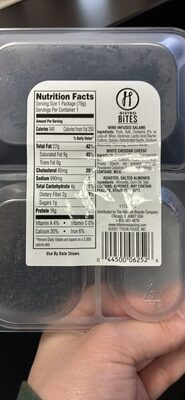 The Hillshire Brands Company
Wine-Infused Salame, White Cheddar Cheese, Salted Almonds, -Bistro- Bites, Wine-Infused Salame, White Cheddar, Cheese Salted Almonds,
High in sodium — 43% DV per serving
High in saturated fat — 45% DV per serving
High in cholesterol — 20% DV per serving
430kcal
20.2Protein
34.2Fat
5.1Carbs
The Hillshire Brands Company
Wine-Infused Salame, White Cheddar Cheese, Salted Almonds, -Bistro- Bites, Wine-Infused Salame, White Cheddar, Cheese Salted Almonds,
High in sodium — 43% DV per serving
High in saturated fat — 45% DV per serving
High in cholesterol — 20% DV per serving
430kcal
20.2Protein
34.2Fat
5.1Carbs