Whole Grain Black Rice
Auto-generated content. This description was generated automatically and is pending editorial review. Inaccuracies are possible. Found a mistake? Contact us.
What it is
Whole grain black rice, also known as forbidden rice, is a variety of rice (Oryza sativa L.) that has a dark, purplish-black color. It is a whole grain, meaning it contains the bran, germ, and endosperm. The black color comes from anthocyanins, the same antioxidants found in blueberries and blackberries.
Why it's used
Black rice is used as a whole grain in various dishes, similar to brown or white rice. Manufacturers use it for its distinct color, nutty flavor, and chewy texture. It is often found in crackers, rice puddings, and as a side dish.
Health notes
Black rice is a good source of fiber, iron, and antioxidants. The U.S. Food and Drug Administration (FDA) generally recognizes it as safe (GRAS) when used as a food ingredient. International bodies like the European Food Safety Authority (EFSA) have evaluated anthocyanins, the compounds responsible for black rice's color, and found them to be safe. Research suggests that the antioxidants in black rice may offer health benefits, but more studies are needed to confirm these effects at typical dietary intakes.
Allergen info
Black rice is not derived from any of the nine FDA major allergens. It does not contain gluten.
Products containing Whole Grain Black Rice
Compare products →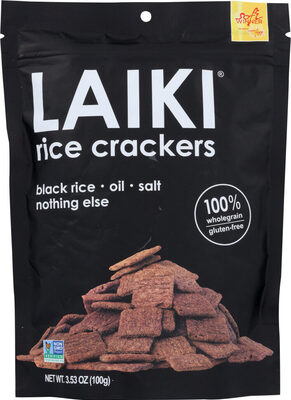 Laiki Inc.
Black Rice With Sea Salt Rice Crackers
464kcal
14.3Protein
21.4Fat
60.7Carbs
Laiki Inc.
Black Rice With Sea Salt Rice Crackers
464kcal
14.3Protein
21.4Fat
60.7Carbs