Yellow Cassava
What is Yellow Cassava?
Yellow cassava is a starchy root vegetable, a variety of the cassava plant (Manihot esculenta). It is native to South America but is now grown in tropical regions worldwide. The root is typically peeled, washed, and then processed into flour or starch for various food applications.
Is Yellow Cassava vegan?
Yellow Cassava is not animal-derived. Products that contain it can still include other animal-derived ingredients, so check the full ingredient list.
Is Yellow Cassava gluten-free?
It is also naturally gluten-free.
Is Yellow Cassava a major allergen?
Yellow cassava is not derived from any of the nine major allergens.
What is Yellow Cassava used for?
Manufacturers use yellow cassava flour or starch as a gluten-free alternative to wheat flour in baked goods, snacks, and noodles.
Is Yellow Cassava safe?
Yellow cassava is generally recognized as safe (GRAS) by the FDA for use as a food ingredient.
Why it's used
Manufacturers use yellow cassava flour or starch as a gluten-free alternative to wheat flour in baked goods, snacks, and noodles. It can also be used as a thickener in sauces and soups, and as a binder in processed foods. Its mild flavor and starchy texture make it versatile in many food products.
Health notes
Yellow cassava is generally recognized as safe (GRAS) by the FDA for use as a food ingredient. It is a source of carbohydrates and some nutrients. Like other starchy root vegetables, it should be consumed in moderation as part of a balanced diet. JECFA and EFSA have evaluated cassava and its derivatives, generally finding them safe for consumption when properly processed.
Allergen info
Yellow cassava is not derived from any of the nine major allergens. It is also naturally gluten-free.
Foods that contain Yellow Cassava
Compare products →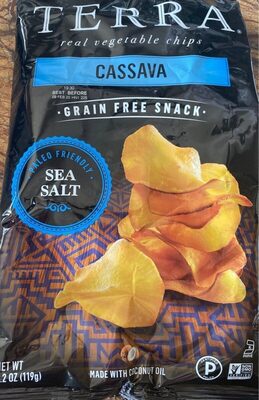 The Hain Celestial Group, Inc.
Cassava Sea Salt Real Vegetable Chips, Cassava Sea Salt
High in saturated fat — 22% DV per serving
500kcal
0Protein
21.4Fat
71.4Carbs
The Hain Celestial Group, Inc.
Cassava Grain Free Snack, Cassava
High in saturated fat — 20% DV per serving
464kcal
3.6Protein
21.4Fat
71.4Carbs
The Hain Celestial Group, Inc.
Cassava Black Garlic Real Vegetable Chips, Cassava
High in saturated fat — 20% DV per serving
464kcal
3.6Protein
21.4Fat
71.4Carbs
The Hain Celestial Group, Inc.
Cassava Real Vegetable Chips, Cassava
High in saturated fat — 22% DV per serving
500kcal
0Protein
21.4Fat
71.4Carbs
The Hain Celestial Group, Inc.
Cassava Sea Salt Real Vegetable Chips, Cassava Sea Salt
High in saturated fat — 22% DV per serving
500kcal
0Protein
21.4Fat
71.4Carbs
The Hain Celestial Group, Inc.
Cassava Grain Free Snack, Cassava
High in saturated fat — 20% DV per serving
464kcal
3.6Protein
21.4Fat
71.4Carbs
The Hain Celestial Group, Inc.
Cassava Black Garlic Real Vegetable Chips, Cassava
High in saturated fat — 20% DV per serving
464kcal
3.6Protein
21.4Fat
71.4Carbs
The Hain Celestial Group, Inc.
Cassava Real Vegetable Chips, Cassava
High in saturated fat — 22% DV per serving
500kcal
0Protein
21.4Fat
71.4Carbs
Learn more
Auto-generated content. This description was generated automatically and is pending editorial review. Inaccuracies are possible. Found a mistake? Contact us.