Almonds Cane Sugar
What is Almonds Cane Sugar?
Almonds are tree nuts that grow on trees native to the Middle East and South Asia. They are the edible seeds of the almond tree, typically oval-shaped with a hard shell. Almonds are often eaten raw, roasted, or used as an ingredient in various dishes and products.
Is Almonds Cane Sugar vegan?
Almonds Cane Sugar is not animal-derived. Products that contain it can still include other animal-derived ingredients, so check the full ingredient list.
Is Almonds Cane Sugar gluten-free?
Almonds do not contain gluten.
Is Almonds Cane Sugar a major allergen?
Almonds are tree nuts, which are one of the 9 major allergens identified by the FDA.
What is Almonds Cane Sugar used for?
Almonds are used in a wide variety of foods for their flavor, texture, and nutritional value.
Is Almonds Cane Sugar safe?
Almonds are a good source of healthy fats, fiber, protein, vitamins, and minerals.
Why it's used
Almonds are used in a wide variety of foods for their flavor, texture, and nutritional value. They can be found in baked goods, snacks, dairy alternatives, and confectioneries. Almonds can also be processed into almond milk, almond butter, and almond flour.
Health notes
Almonds are a good source of healthy fats, fiber, protein, vitamins, and minerals. They are generally recognized as safe (GRAS) by the FDA. Some studies suggest that regular consumption of almonds may contribute to heart health and help manage blood sugar levels. However, they are calorie-dense, so moderation is advised as part of a balanced diet. JECFA has evaluated almonds and found them to be safe for consumption.
Allergen info
Almonds are tree nuts, which are one of the 9 major allergens identified by the FDA. Individuals with tree nut allergies should avoid almonds and products containing them. Almonds do not contain gluten.
Foods that contain Almonds Cane Sugar
Compare products →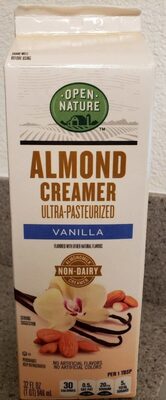 Glencourt Inc.
Vanilla Almond Non-Dairy Creamer, Vanilla
167kcal
0Protein
0Fat
33.3Carbs
Glencourt Inc.
Vanilla Almond Non-Dairy Creamer, Vanilla
167kcal
0Protein
0Fat
33.3Carbs
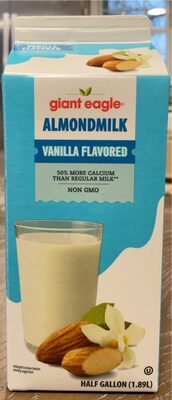 Giant Eagle, Inc.
Vanilla Flavored Almondmilk, Vanilla
High in added sugars — 26% DV per serving
33kcal
0.4Protein
1.0Fat
5.8Carbs
Target Stores
Frozen Dessert, Mocha, Almond Fudge
High in saturated fat — 35% DV per serving
High in added sugars — 44% DV per serving
257kcal
3.7Protein
14.7Fat
28.4Carbs
Giant Eagle, Inc.
Vanilla Flavored Almondmilk, Vanilla
High in added sugars — 26% DV per serving
33kcal
0.4Protein
1.0Fat
5.8Carbs
Target Stores
Frozen Dessert, Mocha, Almond Fudge
High in saturated fat — 35% DV per serving
High in added sugars — 44% DV per serving
257kcal
3.7Protein
14.7Fat
28.4Carbs
Learn more
Auto-generated content. This description was generated automatically and is pending editorial review. Inaccuracies are possible. Found a mistake? Contact us.