And Parmesan
Auto-generated content. This description was generated automatically and is pending editorial review. Inaccuracies are possible. Found a mistake? Contact us.
What it is
Parmesan is a hard, dry cheese with a salty, nutty flavor. It is traditionally made from cow's milk and aged for at least 12 months, often longer. The authentic Italian version is called Parmigiano Reggiano.
Why it's used
Manufacturers add Parmesan cheese to foods primarily for its distinct savory flavor and texture. It is commonly found in pasta dishes, sauces, frozen appetizers, and as a topping for various meals.
Health notes
Parmesan cheese is generally recognized as safe (GRAS) as a food ingredient by the FDA. As a dairy product, it is a source of protein and calcium. Like many cheeses, it can be high in sodium and saturated fat; the Dietary Guidelines for Americans (2025-2030) recommend keeping saturated fat intake under 10% of daily calories. JECFA and EFSA typically evaluate food additives, not whole foods like Parmesan cheese, for which no ADI has been set.
Allergen info
Parmesan cheese is derived from milk, which is one of the nine major food allergens identified by the FDA.
Products containing And Parmesan
Compare products →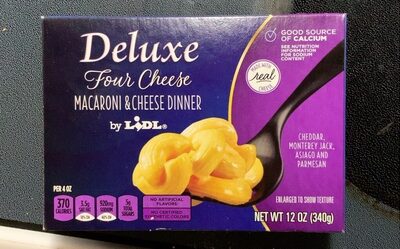 DELUXE
Four Macaroni And Cheese, Four Cheese
High in sodium — 35% DV per serving
286kcal
9.8Protein
8.9Fat
41.1Carbs
Wal-Mart Stores, Inc.
Lasagna Pasta Skillet Meal, Four Cheese Sauce Mix
High in sodium — 20% DV per serving
333kcal
10Protein
0Fat
73.3Carbs
Wal-Mart Stores, Inc.
Cheese Sticks, Mozzarella, Asiago & Parmesan
343kcal
14.3Protein
20Fat
28.6Carbs
Wal-Mart Stores, Inc.
Mozzarella & Asiago Panko Breaded Cheese Sticks With Mozzarella, Asiago, Parmesan And Black Pepper, Mozzarella & Asiago
343kcal
14.3Protein
20Fat
28.6Carbs
Target Stores
3 Cheese Swift Mac Macaroni & Cheese Cups, 3 Cheese Swift Mac
High in sodium — 22% DV per serving
379kcal
12.1Protein
6.9Fat
69.0Carbs
DELUXE
Four Macaroni And Cheese, Four Cheese
High in sodium — 35% DV per serving
286kcal
9.8Protein
8.9Fat
41.1Carbs
Wal-Mart Stores, Inc.
Lasagna Pasta Skillet Meal, Four Cheese Sauce Mix
High in sodium — 20% DV per serving
333kcal
10Protein
0Fat
73.3Carbs
Wal-Mart Stores, Inc.
Cheese Sticks, Mozzarella, Asiago & Parmesan
343kcal
14.3Protein
20Fat
28.6Carbs
Wal-Mart Stores, Inc.
Mozzarella & Asiago Panko Breaded Cheese Sticks With Mozzarella, Asiago, Parmesan And Black Pepper, Mozzarella & Asiago
343kcal
14.3Protein
20Fat
28.6Carbs
Target Stores
3 Cheese Swift Mac Macaroni & Cheese Cups, 3 Cheese Swift Mac
High in sodium — 22% DV per serving
379kcal
12.1Protein
6.9Fat
69.0Carbs