Basmati Rice: Basmati Rice
Auto-generated content. This description was generated automatically and is pending editorial review. Inaccuracies are possible. Found a mistake? Contact us.
What it is
Basmati rice is a long-grain variety of rice known for its distinct aroma and flavor, often described as nutty or floral. It is primarily grown in India and Pakistan, where it is a staple crop. The rice is typically milled to remove the husk, bran, and germ, resulting in white or brown basmati rice.
Why it's used
Manufacturers use basmati rice as a base grain in various dishes due to its fluffy texture and appealing fragrance. It is commonly found in frozen dinners, entrees, and side dishes, particularly those with Indian, Middle Eastern, or South Asian influences. Its distinct flavor makes it a popular choice for pilafs, biryanis, and curries.
Health notes
Basmati rice is a source of carbohydrates and provides some fiber, vitamins, and minerals. The U.S. Food and Drug Administration (FDA) generally recognizes rice as safe (GRAS) for consumption. International bodies like the Joint FAO/WHO Expert Committee on Food Additives (JECFA) have evaluated rice and its components. While rice is a staple food for billions, like all carbohydrate-rich foods, its consumption should be part of a balanced diet. Evidence does not suggest adverse health effects from typical consumption of basmati rice.
Allergen info
Basmati rice is not one of the nine major allergens identified by the FDA. It does not contain gluten.
Products containing Basmati Rice: Basmati Rice
Compare products →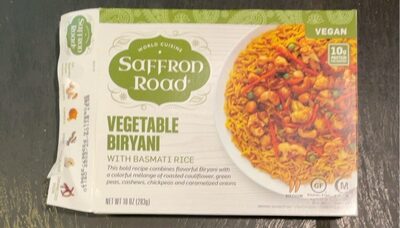 American Halal Company, Inc.
Vegetable Biryani With Basmati Rice, Vegetable
High in sodium — 28% DV per serving
163kcal
3.5Protein
6.0Fat
23.7Carbs
American Halal Company, Inc.
Chicken Vindaloo With Basmati Rice
High in sodium — 29% DV per serving
102kcal
5.7Protein
2.5Fat
16.2Carbs
American Halal Company, Inc.
Vegetable Biryani With Basmati Rice, Vegetable
High in sodium — 28% DV per serving
163kcal
3.5Protein
6.0Fat
23.7Carbs
American Halal Company, Inc.
Chicken Vindaloo With Basmati Rice
High in sodium — 29% DV per serving
102kcal
5.7Protein
2.5Fat
16.2Carbs
 American Halal Company, Inc.
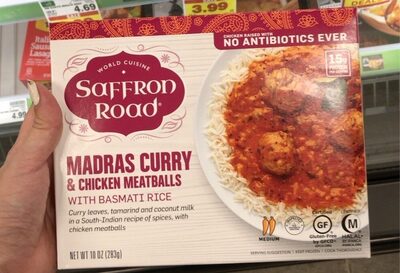
Madras Curry & Chicken Meatballs With Basmati Rice, Madras Curry & Chicken Meatballs
High in sodium — 28% DV per serving
High in saturated fat — 45% DV per serving
141kcal
5.3Protein
5.7Fat
18.4Carbs
American Halal Company, Inc.
Madras Curry & Chicken Meatballs With Basmati Rice, Madras Curry & Chicken Meatballs
High in sodium — 28% DV per serving
High in saturated fat — 45% DV per serving
141kcal
5.3Protein
5.7Fat
18.4Carbs
 American Halal Company, Inc.
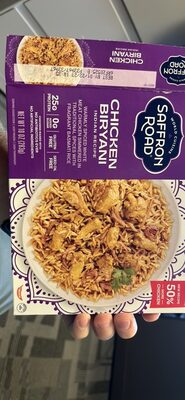
Chicken Biryani With Basmati Rice A Classic Hyderabadi Inspired Recipe With Tender Dark Meat Chicken And Caramelized Onions, Chicken Biryani
High in sodium — 27% DV per serving
141kcal
6.7Protein
4.6Fat
19.1Carbs
American Halal Company, Inc.
Chicken Biryani With Basmati Rice A Classic Hyderabadi Inspired Recipe With Tender Dark Meat Chicken And Caramelized Onions, Chicken Biryani
High in sodium — 27% DV per serving
141kcal
6.7Protein
4.6Fat
19.1Carbs