Bay Leaves
Auto-generated content. This description was generated automatically and is pending editorial review. Inaccuracies are possible. Found a mistake? Contact us.
What it is
Bay leaves come from the aromatic leaves of the bay laurel tree (Laurus nobilis), native to the Mediterranean region. The leaves are typically harvested, dried, and used whole or ground to add flavor to foods. They are not usually eaten directly but are removed before serving.
Why it's used
Bay leaves are primarily used as a flavoring agent in a wide variety of dishes. They impart a subtle, slightly bitter, and aromatic taste to soups, stews, sauces, meats, and rice dishes. Manufacturers use them to enhance the savory profile of many prepared foods.
Health notes
Bay leaves are generally recognized by the FDA as safe (GRAS) for use as a food flavoring. They are not typically consumed in large enough quantities to cause adverse health effects. International bodies like JECFA have evaluated bay leaves and their extracts. Evidence does not suggest significant health concerns at typical consumption levels.
Allergen info
Bay leaves are not derived from any of the nine FDA major allergens. They do not contain gluten.
Products containing Bay Leaves
Compare products →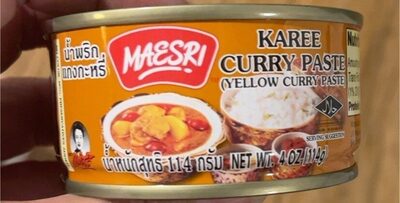 MAESRI
Maesri, Yellow Curry Paste
High in sodium — 25% DV per serving
176kcal
0Protein
8.8Fat
23.5Carbs
HARRIS TEETER FRESH FOODS MARKET
Chicken Stock
High in sodium — 20% DV per serving
13kcal
0Protein
0Fat
1.8Carbs
CASALE TOSCANO
Spice Rub
0kcal
0Protein
0Fat
100Carbs
MAESRI
Chu Chee Curry Paste
High in sodium — 27% DV per serving
125kcal
5Protein
0Fat
20Carbs
O'SOLE MIO
Italian Sausage
287kcal
13.0Protein
6.1Fat
45.2Carbs
LAZIZA INTERNATIONAL
Pasanda Masala, Spice Mix
429kcal
14.3Protein
14.3Fat
57.1Carbs
LAZIZA INTERNATIONAL
Qorma Masala Spice Mix
357kcal
14.3Protein
14.3Fat
42.9Carbs
MAESRI
Maesri, Yellow Curry Paste
High in sodium — 25% DV per serving
176kcal
0Protein
8.8Fat
23.5Carbs
HARRIS TEETER FRESH FOODS MARKET
Chicken Stock
High in sodium — 20% DV per serving
13kcal
0Protein
0Fat
1.8Carbs
CASALE TOSCANO
Spice Rub
0kcal
0Protein
0Fat
100Carbs
MAESRI
Chu Chee Curry Paste
High in sodium — 27% DV per serving
125kcal
5Protein
0Fat
20Carbs
O'SOLE MIO
Italian Sausage
287kcal
13.0Protein
6.1Fat
45.2Carbs
LAZIZA INTERNATIONAL
Pasanda Masala, Spice Mix
429kcal
14.3Protein
14.3Fat
57.1Carbs
LAZIZA INTERNATIONAL
Qorma Masala Spice Mix
357kcal
14.3Protein
14.3Fat
42.9Carbs
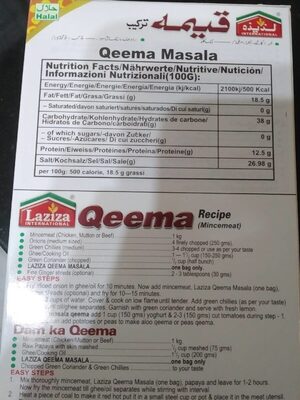 LAZIZA INTERNATIONAL
Qeema Masala
500kcal
12.5Protein
18.8Fat
37.5Carbs
LAZIZA INTERNATIONAL
Qeema Masala
500kcal
12.5Protein
18.8Fat
37.5Carbs
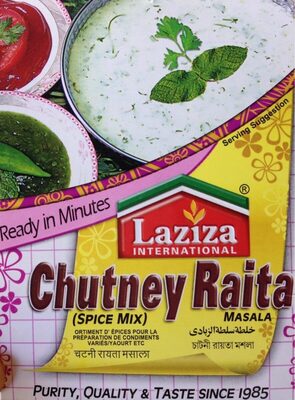 LAZIZA INTERNATIONAL
Chutney / Raita Masala Spice Mix
400kcal
0Protein
0Fat
80Carbs
LAZIZA INTERNATIONAL
Seekh Kebab Masala Spic Mix
429kcal
14.3Protein
14.3Fat
57.1Carbs
LAZIZA INTERNATIONAL
Chutney / Raita Masala Spice Mix
400kcal
0Protein
0Fat
80Carbs
LAZIZA INTERNATIONAL
Seekh Kebab Masala Spic Mix
429kcal
14.3Protein
14.3Fat
57.1Carbs
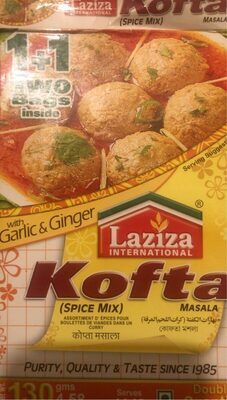 LAZIZA
Kofta Masala
438kcal
12.5Protein
18.8Fat
50Carbs
LAZIZA
Kofta Masala
438kcal
12.5Protein
18.8Fat
50Carbs
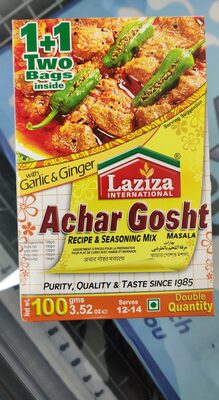 LAZIZA
Achar Gosht Spice Mix
375kcal
12.5Protein
6.2Fat
62.5Carbs
LAZIZA
Achar Gosht Spice Mix
375kcal
12.5Protein
6.2Fat
62.5Carbs