Beef Gravy: Beef Drippings
What is Beef Gravy: Beef Drippings?
Beef drippings are the fats and juices that melt and collect from beef as it cooks. They are a natural byproduct of roasting, grilling, or frying beef. These drippings are typically collected and used to add flavor and richness to other dishes.
Is Beef Gravy: Beef Drippings vegan?
No. Beef Gravy: Beef Drippings is animal-derived, so it is not vegan.
Is Beef Gravy: Beef Drippings gluten-free?
They do not contain gluten.
Is Beef Gravy: Beef Drippings a major allergen?
Beef drippings are not a major allergen.
What is Beef Gravy: Beef Drippings used for?
Manufacturers add beef drippings primarily for their rich, savory flavor and fat content.
Is Beef Gravy: Beef Drippings safe?
Beef drippings are considered a traditional food ingredient and are generally recognized as safe (GRAS) by the FDA.
Why it's used
Manufacturers add beef drippings primarily for their rich, savory flavor and fat content. They are often used as a base for gravies, sauces, and stews to enhance the taste and texture. You can find them in products like frozen dinners, chili, and prepared meat dishes.
Health notes
Beef drippings are considered a traditional food ingredient and are generally recognized as safe (GRAS) by the FDA. They are a source of saturated fat. The Dietary Guidelines for Americans (2025-2030) suggest limiting saturated fat intake to less than 10% of daily calories. JECFA and EFSA do not typically evaluate whole food ingredients like beef drippings as food additives.
Allergen info
Beef drippings are not a major allergen. They do not contain gluten.
Foods that contain Beef Gravy: Beef Drippings
Compare products →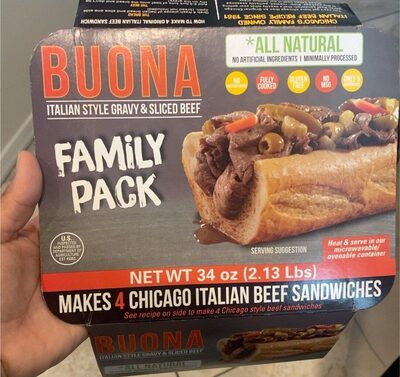 Authentic Brands of Chicago LLC
Italian Style Gravy & Sliced Beef, Italian Style
High in sodium — 37% DV per serving
High in saturated fat — 20% DV per serving
93kcal
8.7Protein
6Fat
1.3Carbs
BUONA
Italian Style Gravy & Sliced Beef Sandwiches Party Pack
High in sodium — 37% DV per serving
High in saturated fat — 20% DV per serving
93kcal
8.7Protein
6Fat
1.3Carbs
Authentic Brands of Chicago LLC
Italian Style Gravy & Sliced Beef
High in sodium — 61% DV per serving
93kcal
9.3Protein
6Fat
1.3Carbs
Authentic Brands of Chicago LLC
Italian Style Gravy & Sliced Beef, Italian Style
High in sodium — 37% DV per serving
High in saturated fat — 20% DV per serving
93kcal
8.7Protein
6Fat
1.3Carbs
BUONA
Italian Style Gravy & Sliced Beef Sandwiches Party Pack
High in sodium — 37% DV per serving
High in saturated fat — 20% DV per serving
93kcal
8.7Protein
6Fat
1.3Carbs
Authentic Brands of Chicago LLC
Italian Style Gravy & Sliced Beef
High in sodium — 61% DV per serving
93kcal
9.3Protein
6Fat
1.3Carbs
Learn more
Auto-generated content. This description was generated automatically and is pending editorial review. Inaccuracies are possible. Found a mistake? Contact us.