Caramel Crunch
What is Caramel Crunch?
Caramel crunch consists of hardened pieces of caramelized sugar, often combined with butter, cream, or other ingredients. It is made by cooking sugar, typically with fat and sometimes dairy, to a high temperature until it caramelizes, then cooling and breaking it into small, crunchy pieces.
Is Caramel Crunch vegan?
No. Caramel Crunch is animal-derived, so it is not vegan.
Is Caramel Crunch a major allergen?
Caramel crunch is not a major allergen itself, but it is typically made with milk products (a major allergen).
What is Caramel Crunch used for?
Manufacturers add caramel crunch to foods primarily for its sweet flavor and crunchy texture.
Is Caramel Crunch safe?
Caramel crunch is a food component, not a regulated additive.
Why it's used
Manufacturers add caramel crunch to foods primarily for its sweet flavor and crunchy texture. It is commonly found in desserts like cookies, chocolate bars, ice cream, and other confectionery products.
Health notes
Caramel crunch is a food component, not a regulated additive. It is primarily composed of sugar, which contributes to added sugars in the diet. The 2025-2030 Dietary Guidelines for Americans recommend no amount of added sugars, and at most 10 grams per meal. Excessive intake of added sugars is associated with an increased risk of chronic diseases. No specific regulatory body like JECFA or EFSA evaluates 'caramel crunch' as a single ingredient; its components are evaluated individually.
Allergen info
Caramel crunch is not a major allergen itself, but it is typically made with milk products (a major allergen). Depending on the recipe, it may also contain other major allergens like tree nuts or soy.
Foods that contain Caramel Crunch
Compare products →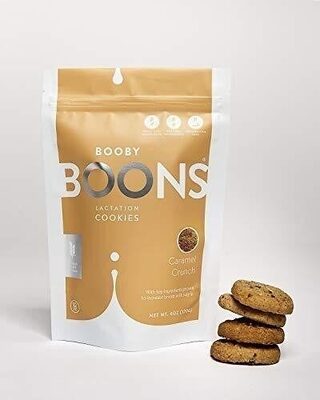 BOOBY BOONS
Caramel Crunch Lactation Cookies, Caramel Crunch
High in added sugars — 20% DV per serving
447kcal
7.1Protein
16.5Fat
65.9Carbs
Godiva Chocolatier, Inc.
Godiva, Milk Chocolate Bar, Salted Caramel, Salted Caramel
High in saturated fat — 35% DV per serving
525kcal
7.5Protein
30Fat
57.5Carbs
Walgreens Co.
Pecan Pie Cookies
543kcal
6.5Protein
30.4Fat
60.9Carbs
BOOBY BOONS
Caramel Crunch Lactation Cookies, Caramel Crunch
High in added sugars — 20% DV per serving
447kcal
7.1Protein
16.5Fat
65.9Carbs
Godiva Chocolatier, Inc.
Godiva, Milk Chocolate Bar, Salted Caramel, Salted Caramel
High in saturated fat — 35% DV per serving
525kcal
7.5Protein
30Fat
57.5Carbs
Walgreens Co.
Pecan Pie Cookies
543kcal
6.5Protein
30.4Fat
60.9Carbs
Auto-generated content. This description was generated automatically and is pending editorial review. Inaccuracies are possible. Found a mistake? Contact us.