Fermented Soybean Sauce
Auto-generated content. This description was generated automatically and is pending editorial review. Inaccuracies are possible. Found a mistake? Contact us.
What it is
Fermented soybean sauce, often called soy sauce, is a savory liquid condiment made from soybeans, water, salt, and a fermenting agent like wheat or mold. The soybeans are typically cooked, mashed, and mixed with wheat and a starter culture, then fermented for several months to develop its characteristic umami flavor and dark color.
Why it's used
Manufacturers use fermented soybean sauce primarily as a flavoring agent to add a salty, savory, and umami taste to a wide variety of foods. It is commonly found in Asian cuisine, marinades, dressings, sauces, and processed snacks.
Health notes
Fermented soybean sauce is generally recognized as safe (GRAS) by the FDA when used as a food ingredient. It is a source of sodium, and high sodium intake can be a concern for blood pressure. International bodies like JECFA have evaluated soy sauce and established guidelines for its use. Some research has explored the potential health benefits of fermented foods, but more studies are needed.
Allergen info
Fermented soybean sauce is derived from soy, which is one of the 9 FDA major allergens. If wheat is used in the fermentation process, it will also contain gluten.
Products containing Fermented Soybean Sauce
Compare products →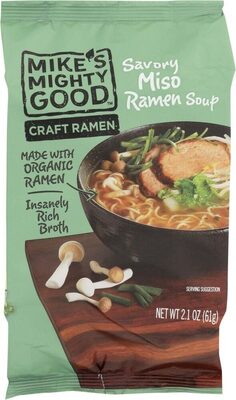 Bright People Foods, Inc.
Savory Miso Ramen Soup, Savory Miso
High in sodium — 51% DV per serving
410kcal
14.8Protein
9.8Fat
63.9Carbs
Bright People Foods, Inc.
Savory Miso Ramen Soup, Savory Miso
High in sodium — 51% DV per serving
410kcal
14.8Protein
9.8Fat
63.9Carbs