Gingerbread Cookies: Enriched Wheat Flour
Auto-generated content. This description was generated automatically and is pending editorial review. Inaccuracies are possible. Found a mistake? Contact us.
What it is
Enriched wheat flour is refined wheat flour that has had certain vitamins and minerals added back after processing. These nutrients typically include iron and B vitamins like folic acid, niacin, riboflavin, and thiamin. It is a key ingredient in many baked goods and is made from wheat grains.
Why it's used
Manufacturers use enriched wheat flour as a primary structural ingredient in baked goods, providing bulk and texture. Its neutral flavor and ability to form gluten make it ideal for products like breads, cakes, cookies, and pasta. It is a staple in the production of cookies and biscuits.
Health notes
Enriched wheat flour is generally recognized as safe (GRAS) by the FDA for use in food. The added nutrients can help prevent deficiencies in the general population. The Joint FAO/WHO Expert Committee on Food Additives (JECFA) has evaluated flour and its enrichment, and EFSA has also evaluated related substances. Evidence does not suggest adverse health effects from typical consumption of enriched wheat flour.
Allergen info
Wheat is one of the 9 major allergens recognized by the FDA. Enriched wheat flour contains gluten, a protein found in wheat that can cause adverse reactions in individuals with celiac disease or non-celiac gluten sensitivity.
Products containing Gingerbread Cookies: Enriched Wheat Flour
Compare products →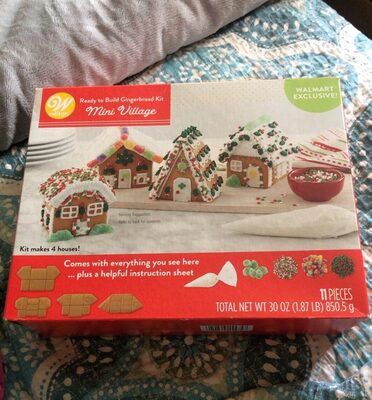 Wilton Industries Inc.
Ready To Build Mini Village Gingerbread Kit
High in added sugars — 32% DV per serving
400kcal
3.3Protein
6.7Fat
76.7Carbs
Wilton Industries Inc.
Ready To Build Gingerbread Camper Kit
High in added sugars — 26% DV per serving
400kcal
3.3Protein
10Fat
70Carbs
Wilton Industries Inc.
Gingerbread Mini Village Kit, Gingerbread
High in added sugars — 30% DV per serving
400kcal
3.3Protein
10Fat
70Carbs
Wilton Industries Inc.
Ready To Build Mini Village Gingerbread Kit
High in added sugars — 32% DV per serving
400kcal
3.3Protein
6.7Fat
76.7Carbs
Wilton Industries Inc.
Ready To Build Gingerbread Camper Kit
High in added sugars — 26% DV per serving
400kcal
3.3Protein
10Fat
70Carbs
Wilton Industries Inc.
Gingerbread Mini Village Kit, Gingerbread
High in added sugars — 30% DV per serving
400kcal
3.3Protein
10Fat
70Carbs
 Wilton Industries Inc.
Pre-Built Gingerbread Townhouse Tidings Kit
High in added sugars — 30% DV per serving
400kcal
3.3Protein
10Fat
73.3Carbs
Wilton Industries Inc.
Pre-Built Gingerbread Townhouse Tidings Kit
High in added sugars — 30% DV per serving
400kcal
3.3Protein
10Fat
73.3Carbs
 Wilton Industries Inc.
Gingerbread Holiday Town Kit, Gingerbread
High in added sugars — 30% DV per serving
400kcal
3.3Protein
10Fat
70Carbs
Brand Castle, LLC
Gingerbread Cookie Nativity Kit, Gingerbread Cookie
433kcal
3.3Protein
10Fat
76.7Carbs
Wilton Industries Inc.
Gingerbread Holiday Town Kit, Gingerbread
High in added sugars — 30% DV per serving
400kcal
3.3Protein
10Fat
70Carbs
Brand Castle, LLC
Gingerbread Cookie Nativity Kit, Gingerbread Cookie
433kcal
3.3Protein
10Fat
76.7Carbs