Glace
Auto-generated content. This description was generated automatically and is pending editorial review. Inaccuracies are possible. Found a mistake? Contact us.
What it is
Glace is a French term that can refer to two main things in food. It often describes a shiny, sweet coating, typically made from sugar and liquid, applied to baked goods. It can also refer to fruits that have been preserved by candying or glazing with a sugar syrup.
Why it's used
As a glaze, it is used to add sweetness, moisture, and an attractive, glossy finish to pastries, cakes, and other desserts. When referring to candied fruit, it provides concentrated fruit flavor, sweetness, and a chewy texture to baked goods like fruitcakes and snack cakes. It is commonly found in cakes, cupcakes, and snack cakes.
Health notes
As a culinary term, "glace" itself does not have a specific regulatory status as a food additive. The ingredients typically used to make a glace, such as sugar, are generally recognized as safe (GRAS). The primary health consideration relates to its sugar content; the 2025-2030 Dietary Guidelines for Americans recommend no amount of added sugars, and at most 10 grams of added sugars per meal. No specific JECFA or EFSA evaluations exist for "glace" as an ingredient.
Allergen info
Not a major allergen. However, depending on the specific ingredients used to make a glace (e.g., milk, eggs, or wheat flour), it may contain common food allergens.
Products containing Glace
Compare products →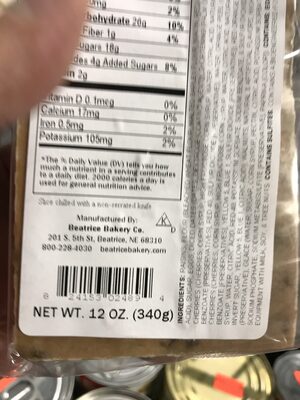 Beatrice Bakery Company
Holiday Fruitcake, Holiday
High in saturated fat — 22% DV per serving
High in cholesterol — 22% DV per serving
363kcal
4.4Protein
8.8Fat
63.7Carbs
Beatrice Bakery Company
Peach Streusel Coffee Cake, Peach Streusel
High in added sugars — 22% DV per serving
360kcal
4Protein
18Fat
50Carbs
Beatrice Bakery Company
Turtle Nut Cake, Turtle
High in saturated fat — 25% DV per serving
460kcal
6Protein
30Fat
42Carbs
Beatrice Bakery Company
Holiday Fruitcake, Holiday
High in saturated fat — 22% DV per serving
High in cholesterol — 22% DV per serving
363kcal
4.4Protein
8.8Fat
63.7Carbs
Beatrice Bakery Company
Peach Streusel Coffee Cake, Peach Streusel
High in added sugars — 22% DV per serving
360kcal
4Protein
18Fat
50Carbs
Beatrice Bakery Company
Turtle Nut Cake, Turtle
High in saturated fat — 25% DV per serving
460kcal
6Protein
30Fat
42Carbs