Grated Parmesan Cheese Parmesan Cheese
Auto-generated content. This description was generated automatically and is pending editorial review. Inaccuracies are possible. Found a mistake? Contact us.
What it is
Parmesan cheese is a hard, dry cheese made from cow's milk. It is produced in Italy, with Parmigiano-Reggiano being the most famous variety. The cheese is aged for at least 12 months, developing a granular texture and a sharp, nutty flavor.
Why it's used
Manufacturers use Parmesan cheese as a flavoring ingredient, adding a savory, umami taste to foods. It is commonly found in pasta dishes, pizzas, sauces, and as a topping for salads and soups.
Health notes
Parmesan cheese is generally recognized as safe (GRAS) by the FDA when used as a food ingredient. It is a source of protein, calcium, and other nutrients. The Joint FAO/WHO Expert Committee on Food Additives (JECFA) and the European Food Safety Authority (EFSA) have evaluated cheese and dairy products, but typically do not set specific limits for whole foods like cheese. It is a natural food product, and health implications are generally related to its nutritional content and sodium levels.
Allergen info
Parmesan cheese is derived from milk, which is one of the nine FDA major allergens. It does not contain gluten.
Products containing Grated Parmesan Cheese Parmesan Cheese
Compare products →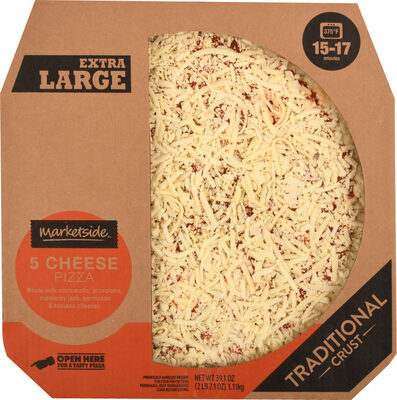 Wal-Mart Stores, Inc.
Five Cheese Mozarella, Provolone, Monterey Jack, Parmesan And Romano Cheeses Pizza, Five Cheese
High in sodium — 31% DV per serving
High in saturated fat — 45% DV per serving
266kcal
11.5Protein
11.5Fat
28.8Carbs
Wal-Mart Stores, Inc.
Five Cheese Mozarella, Provolone, Monterey Jack, Parmesan And Romano Cheeses Pizza, Five Cheese
High in sodium — 31% DV per serving
High in saturated fat — 45% DV per serving
266kcal
11.5Protein
11.5Fat
28.8Carbs
 Wal-Mart Stores, Inc.
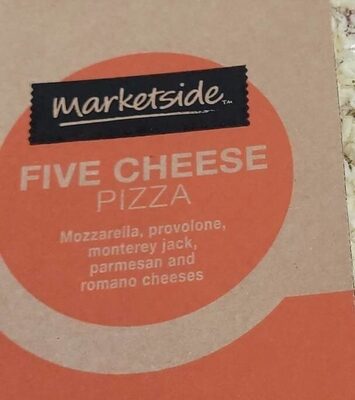
Five Cheese Mozzarella, Provolone, Monterey Jack, Parmesan And Romano Cheeses Medium Traditional Crust Pizza, Five Cheese
High in sodium — 33% DV per serving
High in saturated fat — 50% DV per serving
264kcal
11.5Protein
11.5Fat
29.1Carbs
Wal-Mart Stores, Inc.
Five Cheese Mozzarella, Provolone, Monterey Jack, Parmesan And Romano Cheeses Medium Traditional Crust Pizza, Five Cheese
High in sodium — 33% DV per serving
High in saturated fat — 50% DV per serving
264kcal
11.5Protein
11.5Fat
29.1Carbs
 The Kroger Co.
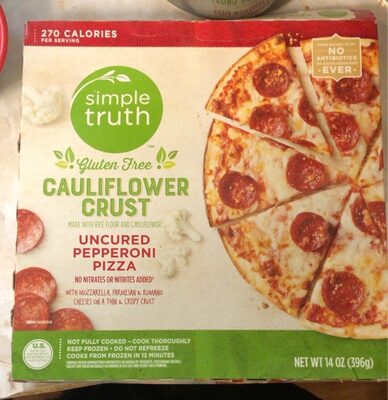
Gluten Free Uncured Pepperoni Pizza Cauliflower Crust, Uncured Pepperoni
High in sodium — 50% DV per serving
High in saturated fat — 30% DV per serving
205kcal
7.6Protein
10.6Fat
—Carbs
The Kroger Co.
Gluten Free Uncured Pepperoni Pizza Cauliflower Crust, Uncured Pepperoni
High in sodium — 50% DV per serving
High in saturated fat — 30% DV per serving
205kcal
7.6Protein
10.6Fat
—Carbs
 Uno Restaurants, Inc.
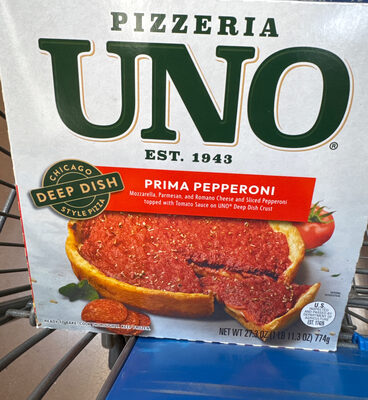
Chicago Style Deep Dish Pizza, Chicago Style
High in sodium — 29% DV per serving
High in saturated fat — 40% DV per serving
233kcal
10.8Protein
13.9Fat
17.1Carbs
Tyson Foods Inc.
Quik-To-Fix Super Crispy Red Label Partially Cooked Breaded Pizza Style Patty Fritters, 4 oz
High in sodium — 54% DV per serving
High in saturated fat — 23% DV per serving
246kcal
14.1Protein
9.4Fat
25.5Carbs
Uno Restaurants, Inc.
Chicago Style Deep Dish Pizza, Chicago Style
High in sodium — 29% DV per serving
High in saturated fat — 40% DV per serving
233kcal
10.8Protein
13.9Fat
17.1Carbs
Tyson Foods Inc.
Quik-To-Fix Super Crispy Red Label Partially Cooked Breaded Pizza Style Patty Fritters, 4 oz
High in sodium — 54% DV per serving
High in saturated fat — 23% DV per serving
246kcal
14.1Protein
9.4Fat
25.5Carbs