Halkidiki Olives
Auto-generated content. This description was generated automatically and is pending editorial review. Inaccuracies are possible. Found a mistake? Contact us.
What it is
Halkidiki olives are a large, oval-shaped green olive variety grown primarily in the Halkidiki region of Greece. They are typically hand-picked when mature and then cured using a brine or dry-salt method to make them edible and preserve them. This process also gives them their characteristic firm texture and mild, fruity flavor.
Why it's used
Halkidiki olives are often sold as table olives, either plain or stuffed with ingredients like garlic, pimentos, or almonds. In processed foods, they are used to add a briny, savory flavor and a firm, meaty texture to dishes like salads, pizzas, pasta sauces, and tapenades.
Health notes
Halkidiki olives are a natural food product and are generally recognized as safe by the FDA. They are a source of healthy monounsaturated fats and antioxidants. While no specific regulatory limits are set for olives, like all foods, excessive consumption should be avoided. International bodies like JECFA have evaluated olive oil, a related product, but specific evaluations for whole olives may vary.
Allergen info
Halkidiki olives are not derived from any of the nine FDA major allergens. They do not contain gluten.
Products containing Halkidiki Olives
Compare products →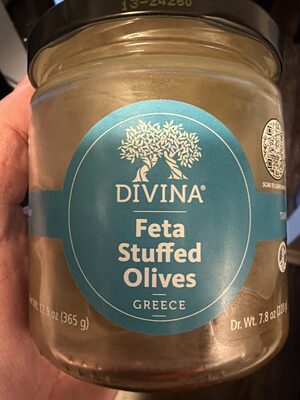 Food Match, Inc.
Feta Stuffed Olives, Feta
200kcal
0Protein
20Fat
13.3Carbs
Food Match, Inc.
Feta Stuffed Olives, Feta
200kcal
0Protein
20Fat
13.3Carbs
 Food Match, Inc.
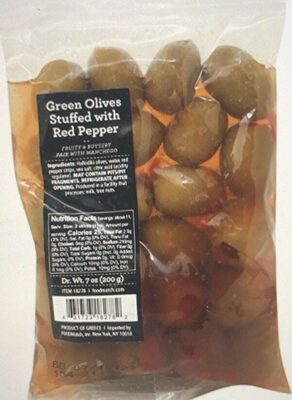
Mt. Athos Green Olives Stuffed With Red Pepper, Red Pepper
167kcal
0Protein
16.7Fat
6.7Carbs
Food Match, Inc.
Mt. Athos Green Olives Stuffed With Red Pepper, Red Pepper
167kcal
0Protein
16.7Fat
6.7Carbs
 Murray's Products LLC
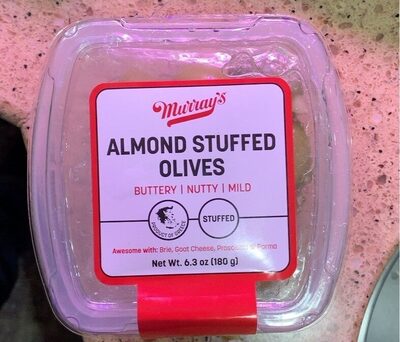
Almond Stuffed Olives, Almond
233kcal
6.7Protein
20Fat
6.7Carbs
Food Match, Inc.
Mt. Athos Green Olives Stuffed With Garlic
133kcal
0Protein
13.3Fat
6.7Carbs
Food Match, Inc.
Red Pepper Stuffed Olives, Red Pepper
167kcal
0Protein
16.7Fat
6.7Carbs
J-K Products
Olives With Chili
160kcal
1.3Protein
15.3Fat
2.7Carbs
Murray's Products LLC
Almond Stuffed Olives, Almond
233kcal
6.7Protein
20Fat
6.7Carbs
Food Match, Inc.
Mt. Athos Green Olives Stuffed With Garlic
133kcal
0Protein
13.3Fat
6.7Carbs
Food Match, Inc.
Red Pepper Stuffed Olives, Red Pepper
167kcal
0Protein
16.7Fat
6.7Carbs
J-K Products
Olives With Chili
160kcal
1.3Protein
15.3Fat
2.7Carbs