Auto-generated content.
This description was generated automatically and is pending editorial review.
Inaccuracies are possible. Found a mistake? Contact us.
Source
Not animal-derived
Allergen
No
Role in food
Manufacturers add hydrolyzed soy protein to foods to enhance their savory or umami flavor, …
What it is
Hydrolyzed soy protein is made by breaking down soy protein into smaller pieces called amino acids. This process is done using acids, enzymes, or both. It is commonly used as a food ingredient.
Why it's used
Manufacturers add hydrolyzed soy protein to foods to enhance their savory or umami flavor, often acting as a flavor enhancer. It is frequently found in sauces, soups, processed meats, and snack foods.
Health notes
In the United States, hydrolyzed soy protein is generally recognized as safe (GRAS) by the FDA when used for its intended purpose. Regulatory bodies like JECFA and EFSA have evaluated similar hydrolyzed vegetable proteins. While generally considered safe, individuals with soy allergies should avoid it. Evidence does not suggest adverse health effects from typical consumption levels.
Allergen info
Hydrolyzed soy protein is derived from soy, which is one of the nine major allergens recognized by the FDA. It does not contain gluten.
Note:
This site presents label data from USDA FoodData Central for general information. It is not medical advice.
Check the package label; formulations change.
 Conagra Brands, Inc
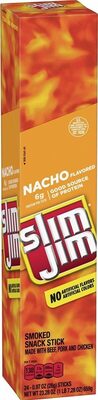
Slim Jim Giant Smoked Meat Sticks, Nacho Flavor, 6g Protein Per Stick, 0.97 oz.
High in sodium — 22% DV per serving
473kcal
21.8Protein
36.4Fat
18.2Carbs
Conagra Brands, Inc
Slim Jim Giant Smoked Meat Sticks, Nacho Flavor, 6g Protein Per Stick, 0.97 oz.
High in sodium — 22% DV per serving
473kcal
21.8Protein
36.4Fat
18.2Carbs