In Edible Beef Collagen Casing
What is In Edible Beef Collagen Casing?
Edible beef collagen casings are made from the collagen found in the connective tissues of cattle. This collagen is processed and reformed into a thin, flexible tube that can be filled with meat products. The casings are then dried and are edible after cooking.
Is In Edible Beef Collagen Casing vegan?
No. In Edible Beef Collagen Casing is animal-derived, so it is not vegan.
Is In Edible Beef Collagen Casing gluten-free?
This ingredient is derived from beef and does not contain gluten.
Is In Edible Beef Collagen Casing a major allergen?
Not a major allergen.
What is In Edible Beef Collagen Casing used for?
Manufacturers use these casings to form uniform shapes for processed meats like sausages, pepperoni, and salami.
Is In Edible Beef Collagen Casing safe?
Edible beef collagen casings are generally considered safe for consumption by the FDA.
Why it's used
Manufacturers use these casings to form uniform shapes for processed meats like sausages, pepperoni, and salami. They provide a consistent size and shape, which helps with even cooking and a pleasant texture. The casings are designed to be eaten along with the product inside.
Health notes
Edible beef collagen casings are generally considered safe for consumption by the FDA. They are a source of protein. Regulatory bodies like JECFA and EFSA have evaluated collagen and its derivatives, but specific evaluations for edible casings are not widely publicized. There are no significant health controversies associated with their typical use in food.
Allergen info
Not a major allergen. This ingredient is derived from beef and does not contain gluten.
Foods that contain In Edible Beef Collagen Casing
Compare products →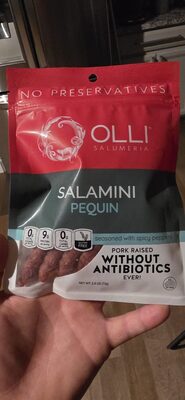 Olli Salumeria Americana
Pequin Seasoned With Spicy Peppers Salamini, Pequin Seasoned With Spicy Peppers
High in sodium — 22% DV per serving
387kcal
29.0Protein
29.0Fat
0Carbs
Olli Salumeria Americana
Salamini Bourbon, Salamini
High in sodium — 22% DV per serving
387kcal
29.0Protein
29.0Fat
0Carbs
Olli Salumeria Americana
Classic Seasoned With Pepper & Garlic Salamini, Classic
High in sodium — 22% DV per serving
387kcal
29.0Protein
29.0Fat
0Carbs
Olli Salumeria Americana
Deep Smokey Salamini Smoked, Deep Smokey
High in sodium — 22% DV per serving
387kcal
29.0Protein
29.0Fat
0Carbs
Olli Salumeria Americana
Pequin Seasoned With Spicy Peppers Salamini, Pequin Seasoned With Spicy Peppers
High in sodium — 22% DV per serving
387kcal
29.0Protein
29.0Fat
0Carbs
Olli Salumeria Americana
Salamini Bourbon, Salamini
High in sodium — 22% DV per serving
387kcal
29.0Protein
29.0Fat
0Carbs
Olli Salumeria Americana
Classic Seasoned With Pepper & Garlic Salamini, Classic
High in sodium — 22% DV per serving
387kcal
29.0Protein
29.0Fat
0Carbs
Olli Salumeria Americana
Deep Smokey Salamini Smoked, Deep Smokey
High in sodium — 22% DV per serving
387kcal
29.0Protein
29.0Fat
0Carbs
Learn more
Auto-generated content. This description was generated automatically and is pending editorial review. Inaccuracies are possible. Found a mistake? Contact us.