Lactase Enzyme And Vitamin D3
What is Lactase Enzyme And Vitamin D3?
Lactase is an enzyme that breaks down lactose, a sugar found in milk. It is often produced through fermentation by specific microorganisms. Vitamin D3, also known as cholecalciferol, is a form of vitamin D that can be produced in the skin when exposed to sunlight or obtained from certain foods and supplements.
Is Lactase Enzyme And Vitamin D3 gluten-free?
Neither is typically a source of gluten.
Is Lactase Enzyme And Vitamin D3 a major allergen?
Lactase enzyme itself is not one of the major allergens.
What is Lactase Enzyme And Vitamin D3 used for?
Lactase enzyme is added to dairy products to make them lactose-free, benefiting individuals with lactose intolerance.
Is Lactase Enzyme And Vitamin D3 safe?
Lactase enzyme is generally recognized as safe (GRAS) by the FDA for its intended use in food.
Why it's used
Lactase enzyme is added to dairy products to make them lactose-free, benefiting individuals with lactose intolerance. Vitamin D3 is often added to foods to increase their nutritional value, as it helps the body absorb calcium and phosphorus.
Health notes
Lactase enzyme is generally recognized as safe (GRAS) by the FDA for its intended use in food. Vitamin D3 is a nutrient and is regulated as such. Both are considered safe when consumed at typical levels found in food. Regulatory bodies like JECFA and EFSA have evaluated these substances, and they are widely used globally. There are no significant controversies regarding their use in food.
Allergen info
Lactase enzyme itself is not one of the major allergens. However, it is often used in dairy products, which are a major allergen. Vitamin D3 is not a major allergen. Neither is typically a source of gluten.
Foods that contain Lactase Enzyme And Vitamin D3
Compare products →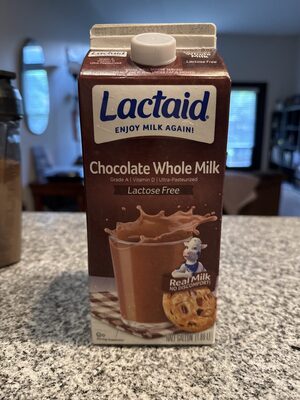 Akpharma Inc.
Chocolate Lactose Free Whole Milk, Chocolate
High in saturated fat — 25% DV per serving
High in added sugars — 24% DV per serving
88kcal
3.3Protein
3.3Fat
10.4Carbs
Akpharma Inc.
Chocolate Lactose Free Whole Milk, Chocolate
High in saturated fat — 25% DV per serving
High in added sugars — 24% DV per serving
88kcal
3.3Protein
3.3Fat
10.4Carbs
 HP Hood LLC
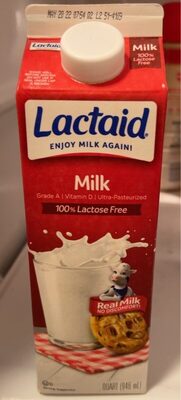
Lactose Free Milk
High in saturated fat — 25% DV per serving
67kcal
3.3Protein
3.8Fat
5.4Carbs
HP Hood LLC
Lactose Free Milk
High in saturated fat — 25% DV per serving
67kcal
3.3Protein
3.8Fat
5.4Carbs
 HP Hood LLC
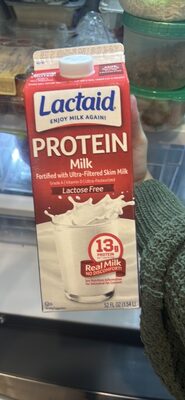
Lactose Free Protein Milk
High in saturated fat — 25% DV per serving
75kcal
5.4Protein
3.8Fat
5Carbs
HP Hood LLC
Lactose Free Protein Milk
High in saturated fat — 25% DV per serving
75kcal
5.4Protein
3.8Fat
5Carbs
 Akpharma Inc.
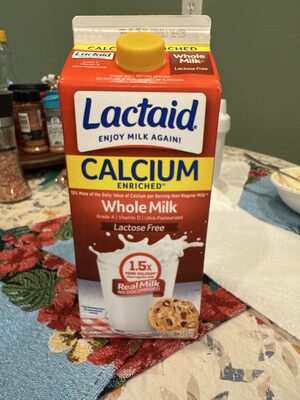
Whole Milk
High in saturated fat — 25% DV per serving
67kcal
3.3Protein
3.3Fat
5.4Carbs
Akpharma Inc.
Whole Milk
High in saturated fat — 25% DV per serving
67kcal
3.3Protein
3.3Fat
5.4Carbs
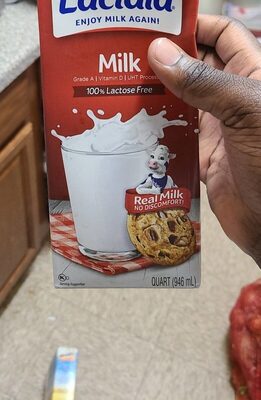 HP Hood LLC
Milk
High in saturated fat — 25% DV per serving
62kcal
3.3Protein
3.3Fat
5Carbs
HP Hood LLC
Milk
High in saturated fat — 25% DV per serving
62kcal
3.3Protein
3.3Fat
5Carbs
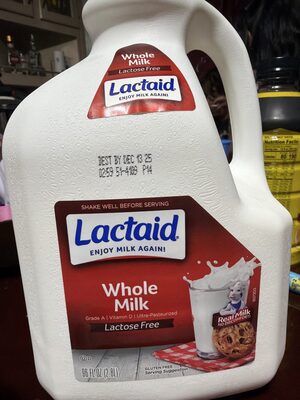 Akpharma Inc.
Milk
High in saturated fat — 25% DV per serving
67kcal
3.3Protein
3.8Fat
5.4Carbs
Akpharma Inc.
Milk
High in saturated fat — 25% DV per serving
67kcal
3.3Protein
3.8Fat
5.4Carbs
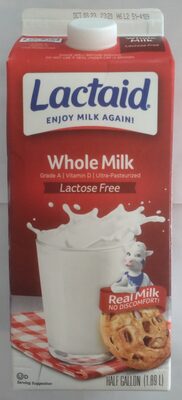 Akpharma Inc.
Lactose Free Whole Milk
High in saturated fat — 25% DV per serving
67kcal
3.3Protein
3.3Fat
5.4Carbs
Topco Associates, Inc.
100% Lactose Free Whole Milk
High in saturated fat — 25% DV per serving
67kcal
3.3Protein
3.3Fat
5.4Carbs
Weis Markets, Inc.
Weis Quality, 100% Lactose Free Whole Milk
High in saturated fat — 25% DV per serving
67kcal
3.3Protein
3.3Fat
5.4Carbs
HP Hood LLC
Lactose Free Whole Milk
High in saturated fat — 25% DV per serving
67kcal
3.3Protein
3.8Fat
5.4Carbs
Akpharma Inc.
Lactose Free Whole Milk
High in saturated fat — 25% DV per serving
67kcal
3.3Protein
3.3Fat
5.4Carbs
Topco Associates, Inc.
100% Lactose Free Whole Milk
High in saturated fat — 25% DV per serving
67kcal
3.3Protein
3.3Fat
5.4Carbs
Weis Markets, Inc.
Weis Quality, 100% Lactose Free Whole Milk
High in saturated fat — 25% DV per serving
67kcal
3.3Protein
3.3Fat
5.4Carbs
HP Hood LLC
Lactose Free Whole Milk
High in saturated fat — 25% DV per serving
67kcal
3.3Protein
3.8Fat
5.4Carbs
Learn more
Auto-generated content. This description was generated automatically and is pending editorial review. Inaccuracies are possible. Found a mistake? Contact us.