Less Than 1% Natural And Artificial Flavors
What is Less Than 1% Natural And Artificial Flavors?
These are complex mixtures of natural and artificial compounds designed to mimic or enhance specific tastes and aromas. Natural flavors are derived from plant or animal sources, while artificial flavors are synthesized chemicals. The exact composition is proprietary and varies by manufacturer.
Is Less Than 1% Natural And Artificial Flavors a major allergen?
Flavorings can sometimes be derived from major allergens like milk, soy, or wheat.
What is Less Than 1% Natural And Artificial Flavors used for?
Manufacturers add flavors to foods to make them more appealing to consumers by adding or enhancing taste and smell.
Is Less Than 1% Natural And Artificial Flavors safe?
In the US, flavorings are regulated by the FDA.
Why it's used
Manufacturers add flavors to foods to make them more appealing to consumers by adding or enhancing taste and smell. They are used in a wide variety of processed foods, including dairy products, baked goods, beverages, and snacks.
Health notes
In the US, flavorings are regulated by the FDA. Many flavor ingredients are considered Generally Recognized As Safe (GRAS) or are approved food additives. International bodies like JECFA and EFSA have evaluated many flavor compounds. At typical consumption levels, these ingredients are not associated with adverse health effects for most people.
Allergen info
Flavorings can sometimes be derived from major allergens like milk, soy, or wheat. Manufacturers are required to list major allergens on the ingredient label. If a flavor contains a major allergen, it must be declared.
Foods that contain Less Than 1% Natural And Artificial Flavors
Compare products →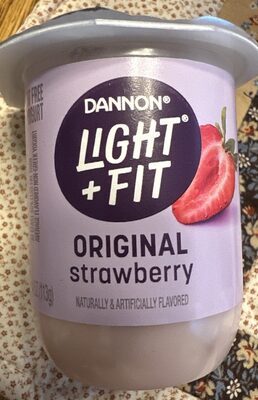 Danone US, LLC
Original Strawberry Peach Nonfat Yogurt, Strawberry Peach
44kcal
2.6Protein
0Fat
8.0Carbs
Danone US, LLC
Original Strawberry Peach Nonfat Yogurt, Strawberry Peach
44kcal
2.6Protein
0Fat
8.0Carbs
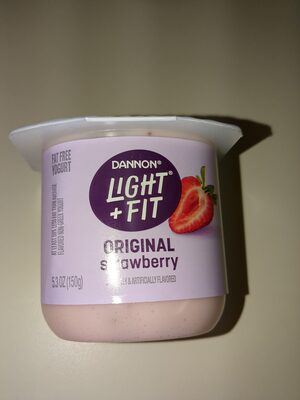 Dannon Company
Light + Fit STRAW/BLUE/PEACH 24X5.3OZ CL
47kcal
3.3Protein
0Fat
8.7Carbs
Dannon Company
Light + Fit STRAW/BLUE/PEACH 24X5.3OZ CL
47kcal
3.3Protein
0Fat
8.7Carbs
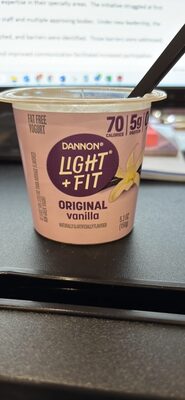 Dannon Company
Light + Fit Dannon Original Vanilla Nonfat Yogurt 5.3 oz. Single Serve
47kcal
3.3Protein
0Fat
8.7Carbs
Dannon Company
Light + Fit Dannon Original Vanilla Nonfat Yogurt 5.3 oz. Single Serve
47kcal
3.3Protein
0Fat
8.7Carbs
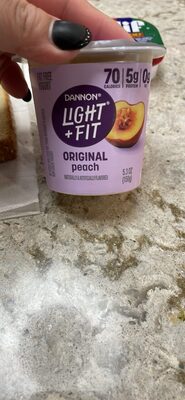 Dannon Company
Light + Fit Dannon
47kcal
3.3Protein
0Fat
9.3Carbs
Dannon Company
Light + Fit Dannon
47kcal
3.3Protein
0Fat
9.3Carbs
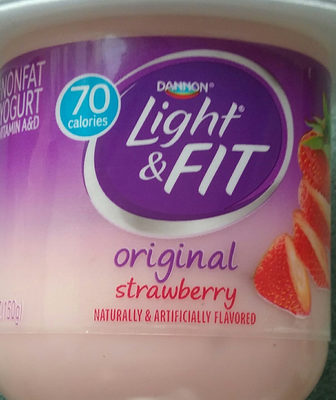 Dannon Company
Light + Fit Dannon
47kcal
3.3Protein
0Fat
8.7Carbs
Dannon Company
Light + Fit Dannon
47kcal
3.3Protein
0Fat
8.7Carbs
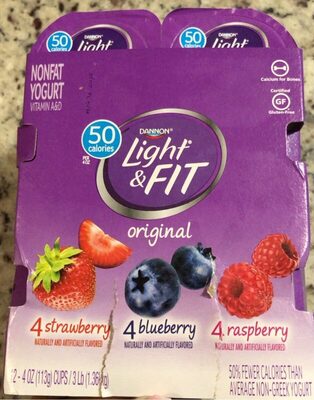 Dannon Company
Light + Fit Dannon
44kcal
2.6Protein
0Fat
8.8Carbs
Dannon Company
Light + Fit Dannon
44kcal
2.6Protein
0Fat
8.8Carbs
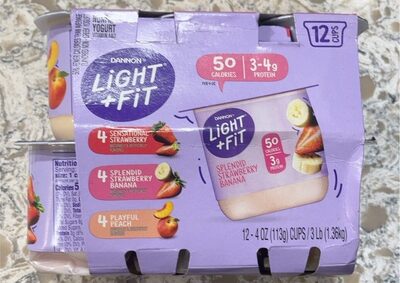 Dannon Company
Light + Fit Dannon
44kcal
2.6Protein
0Fat
8.8Carbs
Dannon Company
Light + Fit Dannon
44kcal
2.6Protein
0Fat
8.8Carbs
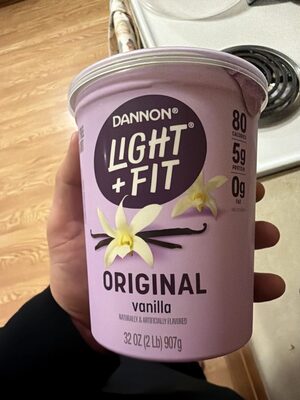 Dannon Company
Light + Fit Dannon
47kcal
2.9Protein
0Fat
8.8Carbs
Dannon Company
Light + Fit Dannon
47kcal
2.9Protein
0Fat
8.8Carbs
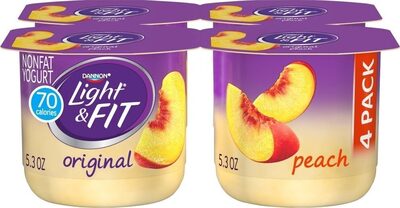 Dannon Company
Light + Fit Dannon
47kcal
3.3Protein
0Fat
9.3Carbs
Ahold USA, Inc.
Giant, Goat Cheese Log, Pumpkin, Pumpkin
286kcal
14.3Protein
17.9Fat
10.7Carbs
Danone US, LLC
Cherry Vanilla Flavored Original Nonfat Yogurt, Cherry Vanilla
47kcal
3.3Protein
0Fat
8.7Carbs
Danone US, LLC
Caramel Apple Pie Flavored Original Nonfat Yogurt, Caramel Apple Pie
47kcal
3.3Protein
0Fat
8.7Carbs
Dannon Company
Light + Fit Dannon
47kcal
3.3Protein
0Fat
9.3Carbs
Ahold USA, Inc.
Giant, Goat Cheese Log, Pumpkin, Pumpkin
286kcal
14.3Protein
17.9Fat
10.7Carbs
Danone US, LLC
Cherry Vanilla Flavored Original Nonfat Yogurt, Cherry Vanilla
47kcal
3.3Protein
0Fat
8.7Carbs
Danone US, LLC
Caramel Apple Pie Flavored Original Nonfat Yogurt, Caramel Apple Pie
47kcal
3.3Protein
0Fat
8.7Carbs
Learn more
Auto-generated content. This description was generated automatically and is pending editorial review. Inaccuracies are possible. Found a mistake? Contact us.