Less Than 2%: Vinegar Powder
Auto-generated content. This description was generated automatically and is pending editorial review. Inaccuracies are possible. Found a mistake? Contact us.
What it is
Vinegar powder is made by drying liquid vinegar and then combining it with a carrier, often maltodextrin or corn syrup solids. This process transforms the liquid into a free-flowing powder that retains the characteristic sour taste of vinegar. It is used to add acidity and flavor without adding liquid.
Why it's used
Manufacturers use vinegar powder as a flavoring agent and acidity regulator in dry mixes, seasonings, and snacks. It provides a tangy taste to products like salad dressings, marinades, and processed meats. Its powdered form makes it easy to incorporate into dry spice blends or rubs.
Health notes
Vinegar powder is generally recognized as safe (GRAS) by the FDA for use in food. It is used in small amounts, and at typical consumption levels, it does not pose significant health risks. International bodies like JECFA have evaluated vinegar and its components, but specific evaluations for vinegar powder may vary.
Allergen info
Vinegar powder is not derived from any of the 9 FDA major allergens. It does not contain gluten.
Products containing Less Than 2%: Vinegar Powder
Compare products →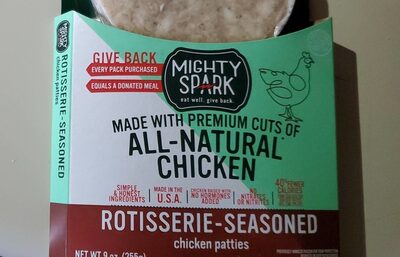 Man Cave
Rotisserie-Seasoned Chicken Patties, Rotisserie-Seasoned
High in cholesterol — 35% DV per serving
164kcal
18.8Protein
8.6Fat
0Carbs
Man Cave
Ground Chicken
High in sodium — 21% DV per serving
High in cholesterol — 32% DV per serving
170kcal
19.6Protein
8.9Fat
0Carbs
Man Cave
Rotisserie-Seasoned Chicken Patties, Rotisserie-Seasoned
High in cholesterol — 35% DV per serving
164kcal
18.8Protein
8.6Fat
0Carbs
Man Cave
Ground Chicken
High in sodium — 21% DV per serving
High in cholesterol — 32% DV per serving
170kcal
19.6Protein
8.9Fat
0Carbs
 Man Cave
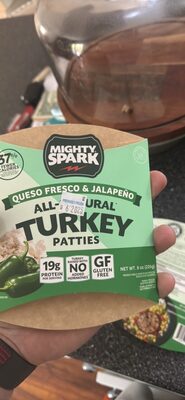
Queso Fresco & Jalapeno All-Natural Turkey Patties, Queso Fresco & Jalapeno
High in sodium — 22% DV per serving
High in saturated fat — 22% DV per serving
High in cholesterol — 28% DV per serving
177kcal
16.8Protein
10.6Fat
1.8Carbs
Man Cave
Queso Fresco & Jalapeno All-Natural Turkey Patties, Queso Fresco & Jalapeno
High in sodium — 22% DV per serving
High in saturated fat — 22% DV per serving
High in cholesterol — 28% DV per serving
177kcal
16.8Protein
10.6Fat
1.8Carbs
 Man Cave
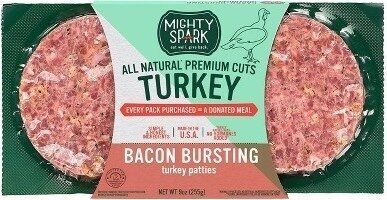
Bacon Bursting All-Natural Turkey Patties, Bacon Bursting
High in sodium — 26% DV per serving
High in cholesterol — 32% DV per serving
168kcal
21.2Protein
8.8Fat
0.9Carbs
Man Cave
Bacon Bursting All-Natural Turkey Patties, Bacon Bursting
High in sodium — 26% DV per serving
High in cholesterol — 32% DV per serving
168kcal
21.2Protein
8.8Fat
0.9Carbs