Turkey
Auto-generated content. This description was generated automatically and is pending editorial review. Inaccuracies are possible. Found a mistake? Contact us.
What it is
Turkey is a large bird native to North America. It is a common source of meat for consumers, raised domestically for its lean protein. The meat can be prepared in many ways, including roasting, grilling, and processing into various food products.
Why it's used
Turkey is primarily used as a protein source in a wide variety of foods. It is often found in processed meats like sausages, deli slices, and ground turkey products. Its versatility allows it to be a main ingredient in dishes ranging from casseroles to sandwiches.
Health notes
Turkey is a source of protein, niacin, vitamin B6, and selenium. The U.S. Food and Drug Administration (FDA) recognizes turkey as Generally Recognized As Safe (GRAS) when used as food. International bodies like the Joint FAO/WHO Expert Committee on Food Additives (JECFA) have evaluated turkey and related compounds. Typical consumption of turkey as part of a balanced diet is not associated with adverse health effects.
Allergen info
Turkey is not one of the nine major allergens identified by the FDA. It does not contain gluten.
Products containing Turkey
Compare products →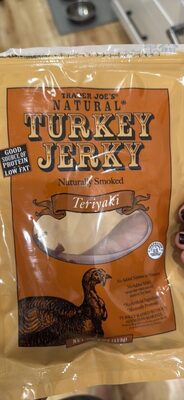 TRADER JOE'S
Turkey Jerky
214kcal
39.3Protein
0Fat
21.4Carbs
TRADER JOE'S
Turkey Jerky
214kcal
39.3Protein
0Fat
21.4Carbs
 JENNIE.O
Turkey Breakfast Sausage Links
135kcal
16.7Protein
8.3Fat
0Carbs
F&E
Turkey Meatballs
131kcal
14.3Protein
4.8Fat
9.5Carbs
JENNIE.O
Turkey Breakfast Sausage Links
135kcal
16.7Protein
8.3Fat
0Carbs
F&E
Turkey Meatballs
131kcal
14.3Protein
4.8Fat
9.5Carbs
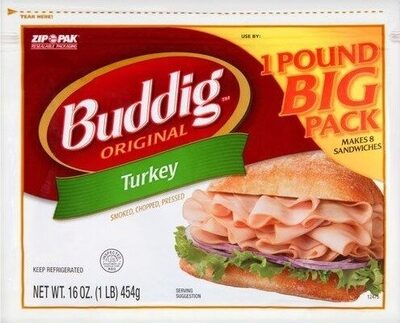 Carl Buddig & Company
Buddig, Turkey
High in sodium — 26% DV per serving
161kcal
17.9Protein
8.9Fat
3.6Carbs
Carl Buddig & Company
Buddig, Turkey
High in sodium — 26% DV per serving
161kcal
17.9Protein
8.9Fat
3.6Carbs