Auto-generated content.
This description was generated automatically and is pending editorial review.
Inaccuracies are possible. Found a mistake? Contact us.
Source
Not animal-derived
Allergen
No
Role in food
Rosemary extract is used as a natural preservative to prevent fats and oils in …
What it is
Rosemary extract is a natural antioxidant derived from the leaves of the rosemary plant (Rosmarinus officinalis). It is typically produced by extracting the active antioxidant compounds from rosemary using solvents, which are then removed. The resulting extract helps protect foods from spoilage.
Why it's used
Rosemary extract is used as a natural preservative to prevent fats and oils in foods from becoming rancid. It helps extend the shelf life of products by inhibiting oxidation. It is commonly found in processed meats, baked goods, snacks, and oils.
Health notes
In the US, rosemary extract is generally recognized as safe (GRAS) by the FDA for use as a food additive. It is used in small amounts to preserve food quality. International bodies like JECFA have evaluated rosemary extract and its components. Research suggests that the antioxidants in rosemary extract may have beneficial properties, but they are consumed in very small quantities in food.
Allergen info
Rosemary extract is not derived from any of the 9 FDA major allergens. It does not contain gluten.
Note:
This site presents label data from USDA FoodData Central for general information. It is not medical advice.
Check the package label; formulations change.
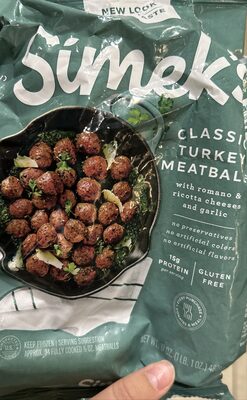 Simeks, Inc.
Gluten Free Turkey Meatballs, Turkey
165kcal
16.5Protein
8.2Fat
4.7Carbs
Simeks, Inc.
Gluten Free Turkey Meatballs, Turkey
165kcal
16.5Protein
8.2Fat
4.7Carbs