Malt Ball
What is Malt Ball?
Malt balls are a candy confection consisting of a crunchy malted milk ball center coated in chocolate. The center is typically made from malted barley flour, wheat flour, and condensed milk, which is then formed into balls and baked to create a porous, crunchy texture. This core is then enrobed in a layer of chocolate.
Is Malt Ball vegan?
No. Malt Ball is animal-derived, so it is not vegan.
Is Malt Ball gluten-free?
They also contain gluten from wheat and barley.
Is Malt Ball a major allergen?
Malt balls contain wheat and milk, which are two of the nine major allergens recognized by the FDA.
What is Malt Ball used for?
Malt balls are primarily used as a confectionery item, either on their own or as an inclusion in other desserts like ice cream or baked goods.
Is Malt Ball safe?
Malt balls are generally considered safe for consumption.
Why it's used
Malt balls are primarily used as a confectionery item, either on their own or as an inclusion in other desserts like ice cream or baked goods. They provide a unique combination of crunchy texture and sweet, malty flavor that complements chocolate.
Health notes
Malt balls are generally considered safe for consumption. The ingredients used, such as malted barley, wheat, milk, and chocolate, are common food items. Regulatory bodies like the FDA have not set specific limits for malt balls as a whole, as they are a composite food product. While high sugar intake is linked to health concerns, malt balls are typically consumed in moderation as a treat.
Allergen info
Malt balls contain wheat and milk, which are two of the nine major allergens recognized by the FDA. They also contain gluten from wheat and barley. Not suitable for individuals with celiac disease or gluten sensitivity.
Foods that contain Malt Ball
Compare products →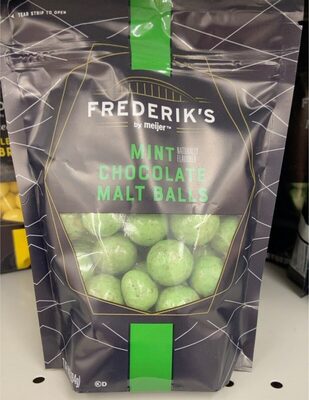 Meijer, Inc.
Mint Chocolate Malt Balls, Mint
High in saturated fat — 22% DV per serving
High in added sugars — 30% DV per serving
500kcal
6.7Protein
26.7Fat
63.3Carbs
Morley Candy Makers Inc.
Milk Chocolate Malt Balls, Milk Chocolate
High in saturated fat — 35% DV per serving
500kcal
5Protein
27.5Fat
62.5Carbs
Ellis Pecan Co., Inc.
Chocolate Malt Balls, Chocolate
High in saturated fat — 22% DV per serving
High in added sugars — 32% DV per serving
467kcal
3.3Protein
26.7Fat
66.7Carbs
Meijer, Inc.
Mint Chocolate Malt Balls, Mint
High in saturated fat — 22% DV per serving
High in added sugars — 30% DV per serving
500kcal
6.7Protein
26.7Fat
63.3Carbs
Morley Candy Makers Inc.
Milk Chocolate Malt Balls, Milk Chocolate
High in saturated fat — 35% DV per serving
500kcal
5Protein
27.5Fat
62.5Carbs
Ellis Pecan Co., Inc.
Chocolate Malt Balls, Chocolate
High in saturated fat — 22% DV per serving
High in added sugars — 32% DV per serving
467kcal
3.3Protein
26.7Fat
66.7Carbs
Auto-generated content. This description was generated automatically and is pending editorial review. Inaccuracies are possible. Found a mistake? Contact us.