Nut & Seed Flour Blend
Auto-generated content. This description was generated automatically and is pending editorial review. Inaccuracies are possible. Found a mistake? Contact us.
What it is
A nut and seed flour blend is made by grinding various nuts and seeds into a fine powder. Common ingredients include almonds, walnuts, pecans, sunflower seeds, and pumpkin seeds. These flours are often used as alternatives to traditional wheat flour in baking.
Why it's used
Manufacturers use nut and seed flour blends to add flavor, texture, and nutritional value to baked goods. They are popular in gluten-free and low-carbohydrate products like cookies, crackers, muffins, and breads. These flours can also contribute to a richer taste and a denser texture.
Health notes
Nut and seed flour blends are generally recognized as safe (GRAS) by the FDA when used as food ingredients. They are a source of healthy fats, protein, and fiber. Regulatory bodies like JECFA and EFSA have evaluated many individual nuts and seeds, but specific evaluations for blended flours are less common. Evidence suggests that nuts and seeds are beneficial as part of a balanced diet, contributing to heart health.
Allergen info
Nut and seed flour blends may contain major allergens such as tree nuts (almonds, walnuts, pecans) and peanuts, depending on the specific ingredients. They do not inherently contain gluten, but cross-contamination during processing is possible if not certified gluten-free.
Products containing Nut & Seed Flour Blend
Compare products →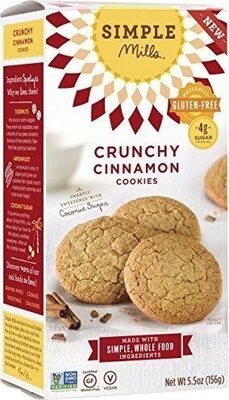 Simple Mills
Cinnamon Crunchy Almond Flour Cookies, Cinnamon
517kcal
6.9Protein
31.0Fat
55.2Carbs
Simple Mills
Cinnamon Crunchy Almond Flour Cookies, Cinnamon
517kcal
6.9Protein
31.0Fat
55.2Carbs
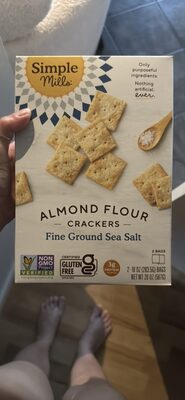 Simple Mills
Fine Ground Sea Salt Almond Flour Crackers, Fine Ground Sea Salt
500kcal
10Protein
—Fat
60Carbs
Simple Mills
Fine Ground Sea Salt Almond Flour Crackers, Fine Ground Sea Salt
500kcal
10Protein
—Fat
60Carbs
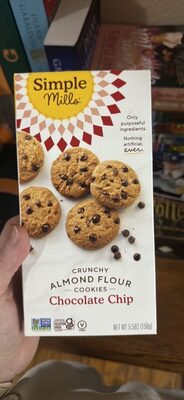 Simple Mills
Crunchy Almond Flour Chocolate Chip Cookies, Chocolate
High in saturated fat — 25% DV per serving
517kcal
6.9Protein
31.0Fat
55.2Carbs
Simple Mills
Crunchy Almond Flour Chocolate Chip Cookies, Chocolate
High in saturated fat — 25% DV per serving
517kcal
6.9Protein
31.0Fat
55.2Carbs
 Simple Mills
Crunchy Almond Flour Double Chocolate Cookies, Chocolate
517kcal
6.9Protein
31.0Fat
55.2Carbs
Simple Mills
Crunchy Almond Flour Double Chocolate Cookies, Chocolate
517kcal
6.9Protein
31.0Fat
55.2Carbs
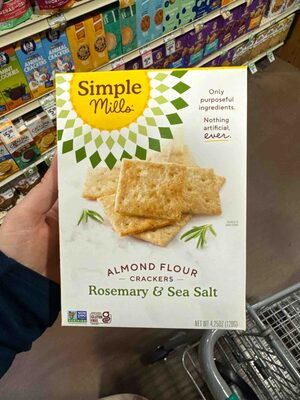 Simple Mills
Rosemary & Sea Salt Almond Flour Crackers, Rosemary; Sea Salt
500kcal
10Protein
26.7Fat
60Carbs
Simple Mills
Rosemary & Sea Salt Almond Flour Crackers, Rosemary; Sea Salt
500kcal
10Protein
26.7Fat
60Carbs
 Simple Mills
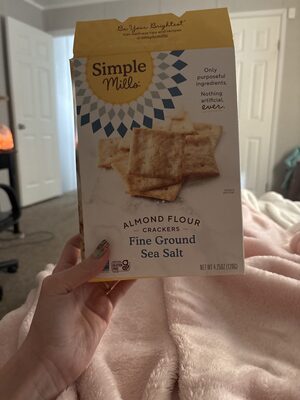
Almond Flour Fine Ground Sea Salt Crackers, Sea Salt
500kcal
10Protein
26.7Fat
60Carbs
Simple Mills
Almond Flour Fine Ground Sea Salt Crackers, Sea Salt
500kcal
10Protein
26.7Fat
60Carbs
 Simple Mills
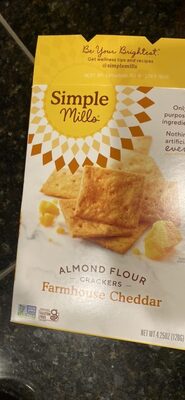
Farmhouse Cheddar Almond Flour Crackers, Cheddar
500kcal
10Protein
26.7Fat
56.7Carbs
Simple Mills
Farmhouse Cheddar Almond Flour Crackers, Cheddar
500kcal
10Protein
26.7Fat
56.7Carbs
 Simple Mills
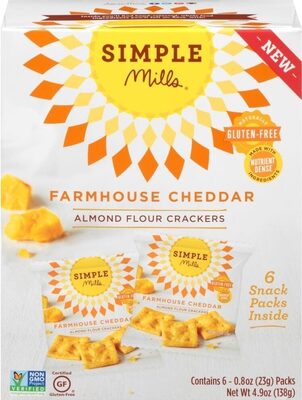
Almond Flour Farmhouse Cheddar Crackers, Cheddar
478kcal
8.7Protein
26.1Fat
56.5Carbs
Simple Mills
Almond Flour Farmhouse Cheddar Crackers, Cheddar
478kcal
8.7Protein
26.1Fat
56.5Carbs
 Simple Mills
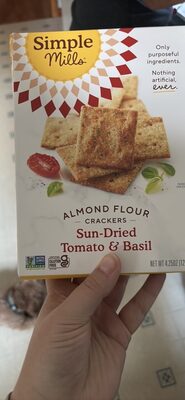
Sun-Dried Tomato & Basil Almond Flour Crackers, Sun-Dried Tomato & Basil
500kcal
10Protein
26.7Fat
60Carbs
Simple Mills
Sun-Dried Tomato & Basil Almond Flour Crackers, Sun-Dried Tomato & Basil
500kcal
10Protein
26.7Fat
60Carbs
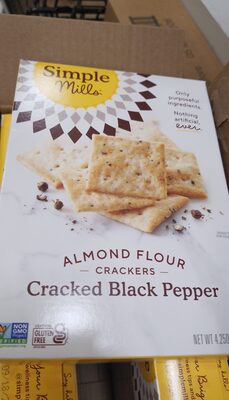 Simple Mills
Cracked Black Pepper Almond Flour Crackers, Cracked Black Pepper
500kcal
10Protein
26.7Fat
60Carbs
Simple Mills
Cracked Black Pepper Almond Flour Crackers, Cracked Black Pepper
500kcal
10Protein
26.7Fat
60Carbs
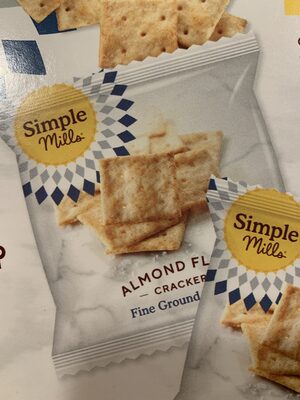 Simple Mills
Fine Ground Sea Salt Almond Flour Crackers, Fine Ground Sea Salt
522kcal
8.7Protein
30.4Fat
60.9Carbs
Simple Mills
Fine Ground Sea Salt Almond Flour Crackers, Fine Ground Sea Salt
522kcal
8.7Protein
30.4Fat
60.9Carbs