Polyglycerol Polyricinoleate
Auto-generated content. This description was generated automatically and is pending editorial review. Inaccuracies are possible. Found a mistake? Contact us.
What it is
Polyglycerol polyricinoleate (PGPR) is a food additive made from the esterification of polyglycerol and ricinoleic acid, which is derived from castor oil. It is a viscous, yellowish liquid or semi-solid.
Why it's used
PGPR functions as an emulsifier, helping to blend ingredients that don't normally mix, like oil and water. It is commonly used in chocolate and confectionery products to reduce viscosity and improve flow, making it easier to process and create smooth textures. It can also be found in baked goods and some dairy products.
Health notes
In the United States, PGPR is affirmed as Generally Recognized As Safe (GRAS) by the FDA for use as an emulsifier. Regulatory bodies like the Joint FAO/WHO Expert Committee on Food Additives (JECFA) and the European Food Safety Authority (EFSA) have evaluated PGPR. Studies on PGPR have not indicated significant health concerns at the levels typically consumed in food. Evidence suggests it is not readily absorbed by the body.
Allergen info
Polyglycerol polyricinoleate is not derived from any of the nine FDA major allergens. It does not contain gluten.
Products containing Polyglycerol Polyricinoleate
Compare products →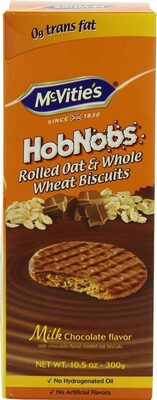 MCVITIE'S
Rolled Oat & Whole Wheat Biscuits
474kcal
5.3Protein
23.7Fat
63.2Carbs
MCVITIE'S
Digestives Biscuits
471kcal
5.9Protein
23.5Fat
64.7Carbs
TURIN
Turin, Kahlua Chocolates
High in saturated fat — 25% DV per serving
475kcal
5Protein
22.5Fat
62.5Carbs
MCVITIE'S
Digestives Biscuit
471kcal
5.9Protein
23.5Fat
64.7Carbs
MCVITIE'S
Rolled Oat & Whole Wheat Biscuits
474kcal
5.3Protein
23.7Fat
63.2Carbs
MCVITIE'S
Digestives Biscuits
471kcal
5.9Protein
23.5Fat
64.7Carbs
TURIN
Turin, Kahlua Chocolates
High in saturated fat — 25% DV per serving
475kcal
5Protein
22.5Fat
62.5Carbs
MCVITIE'S
Digestives Biscuit
471kcal
5.9Protein
23.5Fat
64.7Carbs
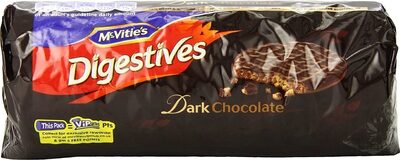 MCVITIE'S
Digestives Wheat Biscuit
529kcal
5.9Protein
23.5Fat
64.7Carbs
EXCELLENT BARON
Delicadore Latte Macchiato
High in saturated fat — 35% DV per serving
556kcal
5.6Protein
36.1Fat
52.8Carbs
HEIDEL
Assorted Chocolate
High in saturated fat — 30% DV per serving
High in added sugars — 28% DV per serving
533kcal
6.7Protein
33.3Fat
56.7Carbs
MCVITIE'S
Digestives Wheat Biscuit
529kcal
5.9Protein
23.5Fat
64.7Carbs
EXCELLENT BARON
Delicadore Latte Macchiato
High in saturated fat — 35% DV per serving
556kcal
5.6Protein
36.1Fat
52.8Carbs
HEIDEL
Assorted Chocolate
High in saturated fat — 30% DV per serving
High in added sugars — 28% DV per serving
533kcal
6.7Protein
33.3Fat
56.7Carbs
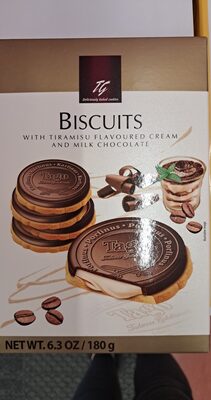 TAGO
Deliciously Baked Cookies Biscuits With Tiramisu Flavored Cream Covered With Chocolate
High in saturated fat — 25% DV per serving
533kcal
6.7Protein
30Fat
56.7Carbs
TAGO
Deliciously Baked Cookies Biscuits With Tiramisu Flavored Cream Covered With Chocolate
High in saturated fat — 25% DV per serving
533kcal
6.7Protein
30Fat
56.7Carbs
 REESE'S
Miniatures Peanut Butter Cups
High in saturated fat — 25% DV per serving
500kcal
9.1Protein
29.6Fat
59.1Carbs
REESE'S
Miniatures Peanut Butter Cups
High in saturated fat — 25% DV per serving
500kcal
9.1Protein
29.6Fat
59.1Carbs
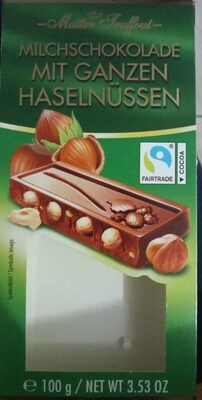 MAITRE TRUFFOUT
Milk Chocolate With Whole Hazelnuts, Milk Chocolate
539kcal
6.0Protein
35.9Fat
47.9Carbs
MAITRE TRUFFOUT
Milk Chocolate With Whole Hazelnuts, Milk Chocolate
539kcal
6.0Protein
35.9Fat
47.9Carbs
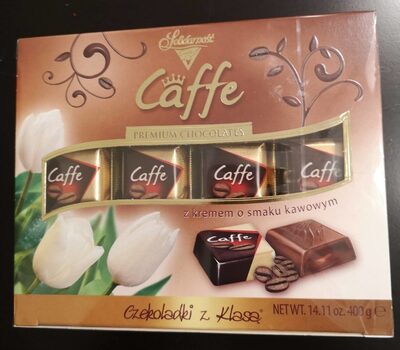 CAFFEE
Premium Chocolates
495kcal
4.4Protein
25Fat
59Carbs
CAFFEE
Premium Chocolates
495kcal
4.4Protein
25Fat
59Carbs