Preservatives Sodium Propionate
Auto-generated content. This description was generated automatically and is pending editorial review. Inaccuracies are possible. Found a mistake? Contact us.
What it is
Sodium propionate is a salt of propionic acid, a naturally occurring fatty acid found in some foods. It is typically produced industrially by reacting propionic acid with sodium hydroxide or sodium carbonate. It appears as a white crystalline powder.
Why it's used
Manufacturers add sodium propionate to foods primarily as a preservative to inhibit the growth of mold and bacteria. This helps extend the shelf life of baked goods. It is commonly found in cakes, cupcakes, snack cakes, cookies, and biscuits.
Health notes
In the United States, sodium propionate is generally recognized as safe (GRAS) by the FDA for use as a food additive. Regulatory bodies like JECFA and EFSA have evaluated its safety and established guidelines for its use. Studies on animals have shown it to be safe at typical dietary levels. Some research has explored its potential role in metabolism, but more study is needed to understand any long-term effects.
Allergen info
Sodium propionate is not derived from any of the nine FDA major allergens. It does not contain gluten.
Products containing Preservatives Sodium Propionate
Compare products →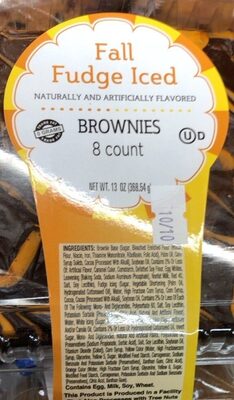 MJAY's Specialty Baked Foods Inc.
Fall Fudge Iced Brownies, Fall Fudge Iced
High in added sugars — 42% DV per serving
391kcal
2.2Protein
13.0Fat
67.4Carbs
MJAY's Specialty Baked Foods Inc.
Fudge Iced Brownies With Red And Pink Drizzle, Fudge Iced
391kcal
—Protein
13.0Fat
67.4Carbs
MJAY's Specialty Baked Foods Inc.
Fall Fudge Iced Brownies, Fall Fudge Iced
High in added sugars — 42% DV per serving
391kcal
2.2Protein
13.0Fat
67.4Carbs
MJAY's Specialty Baked Foods Inc.
Fudge Iced Brownies With Red And Pink Drizzle, Fudge Iced
391kcal
—Protein
13.0Fat
67.4Carbs