Raising Agent
Auto-generated content. This description was generated automatically and is pending editorial review. Inaccuracies are possible. Found a mistake? Contact us.
What it is
Raising agents are substances that cause doughs and batters to rise, creating a lighter texture and increased volume. They can be chemical leavening agents, like baking soda and baking powder, or biological agents, such as yeast. Chemical agents produce carbon dioxide gas when mixed with liquid and/or heated, while yeast produces carbon dioxide through fermentation.
Why it's used
Manufacturers add raising agents to baked goods like cakes, cookies, breads, and muffins to make them fluffy and tender. They are essential for achieving the desired airy structure in these products. Other common applications include pancakes, waffles, and some processed snacks.
Health notes
Chemical raising agents like baking soda (sodium bicarbonate) and baking powder are generally recognized as safe (GRAS) by the FDA when used as intended. Yeast is also considered safe. These ingredients are consumed in small amounts and are not typically associated with adverse health effects at normal dietary levels. International bodies like JECFA and EFSA have evaluated various leavening agents. Some individuals may experience digestive discomfort from certain ingredients, but this is not widespread.
Allergen info
Raising agents themselves are not typically derived from major allergens. However, some baking powders may contain cornstarch, which is not a major allergen but can be a concern for those with corn sensitivities. Yeast is not a major allergen. Gluten is not present in most raising agents unless they are formulated with wheat-based ingredients.
Products containing Raising Agent
Compare products →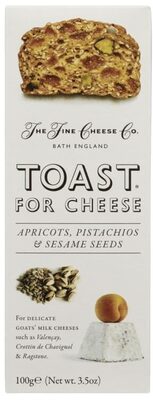 THE FINE CHEESE CO.
Toast For Cheese Apricots, Pistachios & Sunflower Seeds
431kcal
10.1Protein
15.2Fat
60.9Carbs
THE FINE CHEESE CO.
Toast For Cheese Apricots, Pistachios & Sunflower Seeds
431kcal
10.1Protein
15.2Fat
60.9Carbs
 TWIX
Twix, Milk Chocolate Covered Caramel And Biscuit Bar
495kcal
4.5Protein
23.9Fat
64.5Carbs
TWIX
Twix, Milk Chocolate Covered Caramel And Biscuit Bar
495kcal
4.5Protein
23.9Fat
64.5Carbs
 THE FINE CHEESE CO.
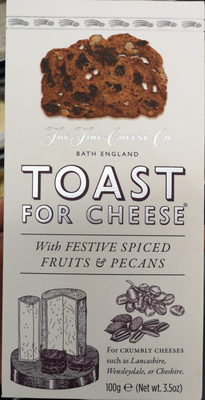
Toast For Cheese With Festive Spiced Fruits & Pecans
402kcal
8.3Protein
9.7Fat
62.4Carbs
JACOBSENS OF DENMARK
Imported Danish Butter Cookies
High in saturated fat — 20% DV per serving
467kcal
3.3Protein
23.3Fat
56.7Carbs
PANDAN
Martabak Mix
350kcal
10Protein
0Fat
77.5Carbs
THE FINE CHEESE CO.
Toast For Cheese With Festive Spiced Fruits & Pecans
402kcal
8.3Protein
9.7Fat
62.4Carbs
JACOBSENS OF DENMARK
Imported Danish Butter Cookies
High in saturated fat — 20% DV per serving
467kcal
3.3Protein
23.3Fat
56.7Carbs
PANDAN
Martabak Mix
350kcal
10Protein
0Fat
77.5Carbs
 MILLER'S ELEMENTS
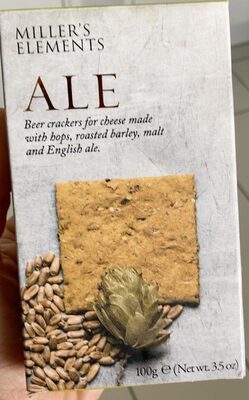
Ale Beer Crackers
406kcal
10.7Protein
10.4Fat
66.3Carbs
MILLER'S ELEMENTS
Ale Beer Crackers
406kcal
10.7Protein
10.4Fat
66.3Carbs