Ramen Noodle Ingredients: Enriched Flour
Auto-generated content. This description was generated automatically and is pending editorial review. Inaccuracies are possible. Found a mistake? Contact us.
What it is
Enriched flour is refined wheat flour that has had vitamins and minerals added back in during the milling process. These nutrients are lost when the bran and germ are removed to create white flour. The enrichment process typically adds back iron, thiamin (vitamin B1), riboflavin (vitamin B2), niacin (vitamin B3), and folic acid (vitamin B9).
Why it's used
Enriched flour is a common ingredient in many baked goods and pasta products. Manufacturers use it as the primary flour component in items like bread, cakes, cookies, and noodles. It provides structure and texture to these foods.
Health notes
In the US, enriched flour is generally recognized as safe (GRAS) by the FDA. The added nutrients can help prevent deficiencies in the population. The Joint FAO/WHO Expert Committee on Food Additives (JECFA) has evaluated flour enrichment, and the European Food Safety Authority (EFSA) also assesses food additives. Typical intakes of enriched flour are not associated with adverse health effects.
Allergen info
Enriched flour is derived from wheat, which is one of the nine FDA major allergens. It also contains gluten.
Products containing Ramen Noodle Ingredients: Enriched Flour
Compare products →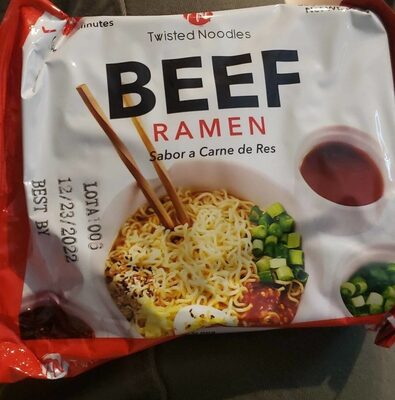 Albany Farms, LLC
Beef Ramen, Beef
High in sodium — 31% DV per serving
442kcal
9.3Protein
16.3Fat
62.8Carbs
Albany Farms, LLC
Beef Ramen, Beef
High in sodium — 31% DV per serving
442kcal
9.3Protein
16.3Fat
62.8Carbs
 Albany Farms, LLC
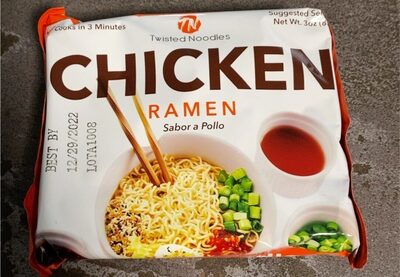
Chicken Ramen, Chicken
High in sodium — 33% DV per serving
442kcal
9.3Protein
16.3Fat
62.8Carbs
Pueblo Spice Co.
Chicken Flavor Ramen Noodle Soup, Chicken
High in sodium — 59% DV per serving
High in saturated fat — 35% DV per serving
435kcal
10.6Protein
17.6Fat
63.5Carbs
Albany Farms, LLC
Beef Flavor Ramen Soup Twisted Noodles, Beef
High in saturated fat — 30% DV per serving
453kcal
9.4Protein
18.8Fat
59.4Carbs
Albany Farms, LLC
Shrimp Ramen Noodle Soup, Shrimp
High in saturated fat — 30% DV per serving
453kcal
9.4Protein
18.8Fat
59.4Carbs
Albany Farms, LLC
Chicken Ramen, Chicken
High in sodium — 33% DV per serving
442kcal
9.3Protein
16.3Fat
62.8Carbs
Pueblo Spice Co.
Chicken Flavor Ramen Noodle Soup, Chicken
High in sodium — 59% DV per serving
High in saturated fat — 35% DV per serving
435kcal
10.6Protein
17.6Fat
63.5Carbs
Albany Farms, LLC
Beef Flavor Ramen Soup Twisted Noodles, Beef
High in saturated fat — 30% DV per serving
453kcal
9.4Protein
18.8Fat
59.4Carbs
Albany Farms, LLC
Shrimp Ramen Noodle Soup, Shrimp
High in saturated fat — 30% DV per serving
453kcal
9.4Protein
18.8Fat
59.4Carbs