Rapeseed Oil And Salt
What is Rapeseed Oil And Salt?
Rapeseed oil, also known as canola oil, is a vegetable oil made from the seeds of the rapeseed plant. The seeds are crushed to extract the oil, which is then refined to remove impurities and often treated to reduce its naturally bitter flavor.
Is Rapeseed Oil And Salt vegan?
Rapeseed Oil And Salt is not animal-derived. Products that contain it can still include other animal-derived ingredients, so check the full ingredient list.
Is Rapeseed Oil And Salt gluten-free?
It does not contain gluten.
Is Rapeseed Oil And Salt a major allergen?
Rapeseed oil is not derived from any of the 9 FDA major allergens.
What is Rapeseed Oil And Salt used for?
Rapeseed oil is used as a cooking oil and as an ingredient in many processed foods due to its neutral flavor and versatility.
Is Rapeseed Oil And Salt safe?
Rapeseed oil is generally recognized as safe (GRAS) by the FDA for use in food.
Why it's used
Rapeseed oil is used as a cooking oil and as an ingredient in many processed foods due to its neutral flavor and versatility. It functions as a fat or oil, providing moisture and texture in baked goods like cookies and biscuits, and is also found in snacks like popcorn and peanut products.
Health notes
Rapeseed oil is generally recognized as safe (GRAS) by the FDA for use in food. It is a source of monounsaturated and polyunsaturated fats, including omega-3 and omega-6 fatty acids. International bodies like JECFA have evaluated rapeseed oil. At typical consumption levels, it is considered safe.
Allergen info
Rapeseed oil is not derived from any of the 9 FDA major allergens. It does not contain gluten.
Foods that contain Rapeseed Oil And Salt
Compare products →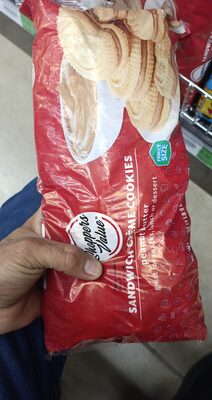 Supervalu, Inc.
Peanut Butter Sandwich Creme Cookies, Peanut Butter
High in added sugars — 26% DV per serving
432kcal
5.4Protein
16.2Fat
67.6Carbs
AbiMar Foods, Inc.
Tru-Blu, Sandwich Cookies, Peanut Butter, Peanut Butter
441kcal
5.9Protein
17.6Fat
61.8Carbs
Goo Goo Cluster, LLC
Cluster, Peanut Butter
High in saturated fat — 23% DV per serving
535kcal
13.9Protein
34.9Fat
46.5Carbs
Weis Markets, Inc.
Peanut Butter Flavored Sandwich Creme Cookies, Peanut Butter
432kcal
5.4Protein
16.2Fat
67.6Carbs
AbiMar Foods, Inc.
Peanut Butter Sandwich Creme Cookies, Peanut Butter
High in added sugars — 22% DV per serving
471kcal
5.9Protein
14.7Fat
73.5Carbs
Goo Goo Cluster, LLC
Goo Goo, Cluster Peanut Butter And Peanuts Coated With Milk Chocolate
High in saturated fat — 25% DV per serving
535kcal
13.9Protein
34.9Fat
48.8Carbs
Supervalu, Inc.
Peanut Butter Sandwich Creme Cookies, Peanut Butter
High in added sugars — 26% DV per serving
432kcal
5.4Protein
16.2Fat
67.6Carbs
AbiMar Foods, Inc.
Tru-Blu, Sandwich Cookies, Peanut Butter, Peanut Butter
441kcal
5.9Protein
17.6Fat
61.8Carbs
Goo Goo Cluster, LLC
Cluster, Peanut Butter
High in saturated fat — 23% DV per serving
535kcal
13.9Protein
34.9Fat
46.5Carbs
Weis Markets, Inc.
Peanut Butter Flavored Sandwich Creme Cookies, Peanut Butter
432kcal
5.4Protein
16.2Fat
67.6Carbs
AbiMar Foods, Inc.
Peanut Butter Sandwich Creme Cookies, Peanut Butter
High in added sugars — 22% DV per serving
471kcal
5.9Protein
14.7Fat
73.5Carbs
Goo Goo Cluster, LLC
Goo Goo, Cluster Peanut Butter And Peanuts Coated With Milk Chocolate
High in saturated fat — 25% DV per serving
535kcal
13.9Protein
34.9Fat
48.8Carbs
Learn more
Auto-generated content. This description was generated automatically and is pending editorial review. Inaccuracies are possible. Found a mistake? Contact us.