Ripe Plantain
Auto-generated content. This description was generated automatically and is pending editorial review. Inaccuracies are possible. Found a mistake? Contact us.
What it is
Ripe plantains are a type of banana that is allowed to fully ripen on the plant, turning yellow or even black and becoming sweeter and softer than green plantains. They are a staple food in many tropical regions, including parts of Africa, Asia, and Latin America. Ripe plantains are typically eaten cooked, often fried, baked, or boiled.
Why it's used
Ripe plantains are primarily used as a carbohydrate-rich food source, offering a natural sweetness and distinct flavor. Manufacturers use them in snack foods like chips and crisps, as well as in baked goods and desserts. Their soft texture when cooked also makes them suitable for purees and baby foods.
Health notes
Ripe plantains are a source of carbohydrates, fiber, vitamins (like Vitamin C and B6), and minerals (like potassium). They are generally recognized as safe (GRAS) by the FDA when used as a food ingredient. International bodies like JECFA have evaluated plantains and related compounds, but no specific numeric limits are typically set for whole foods like this. Evidence does not suggest adverse health effects from consuming ripe plantains in typical dietary amounts.
Allergen info
Plantains are not derived from any of the 9 FDA major allergens. They do not contain gluten.
Products containing Ripe Plantain
Compare products →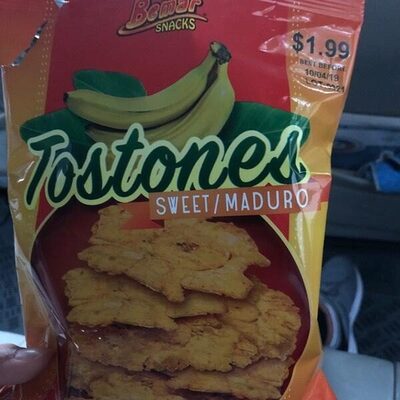 Stiebs LLC
Sweet Tostones, Sweet
High in saturated fat — 20% DV per serving
500kcal
3.6Protein
28.6Fat
75Carbs
Barberi International Inc.
Salted Kettle Cooked Plantain Chips, Salted
High in saturated fat — 20% DV per serving
571kcal
3.6Protein
32.1Fat
64.3Carbs
Stiebs LLC
Sweet Tostones, Sweet
High in saturated fat — 20% DV per serving
500kcal
3.6Protein
28.6Fat
75Carbs
Barberi International Inc.
Salted Kettle Cooked Plantain Chips, Salted
High in saturated fat — 20% DV per serving
571kcal
3.6Protein
32.1Fat
64.3Carbs
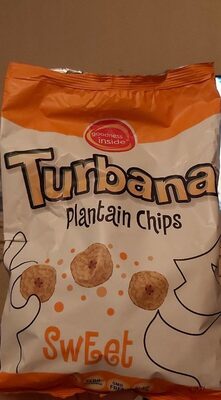 Fyffes North America Inc.
Sweet Plantain Chips, Sweet
500kcal
3.6Protein
21.4Fat
71.4Carbs
Safeway, Inc.
Sweet Plantain Chips, Sweet
500kcal
3.6Protein
21.4Fat
71.4Carbs
Fyffes North America Inc.
Plantain Chips, Sweet
500kcal
3.3Protein
23.3Fat
66.7Carbs
Fyffes North America Inc.
Plantain Chips, Sweet
536kcal
3.6Protein
25Fat
71.4Carbs
Barberi International Inc.
The Original Naturally Sweet Plantain Strips Maduritos, Original
500kcal
0Protein
21.4Fat
71.4Carbs
Gracekennedy Foods (USA) LLC
Sweet Tostones
321kcal
3.6Protein
21.4Fat
28.6Carbs
Fyffes North America Inc.
Sweet Plantain Chips, Sweet
500kcal
3.6Protein
21.4Fat
71.4Carbs
Safeway, Inc.
Sweet Plantain Chips, Sweet
500kcal
3.6Protein
21.4Fat
71.4Carbs
Fyffes North America Inc.
Plantain Chips, Sweet
500kcal
3.3Protein
23.3Fat
66.7Carbs
Fyffes North America Inc.
Plantain Chips, Sweet
536kcal
3.6Protein
25Fat
71.4Carbs
Barberi International Inc.
The Original Naturally Sweet Plantain Strips Maduritos, Original
500kcal
0Protein
21.4Fat
71.4Carbs
Gracekennedy Foods (USA) LLC
Sweet Tostones
321kcal
3.6Protein
21.4Fat
28.6Carbs
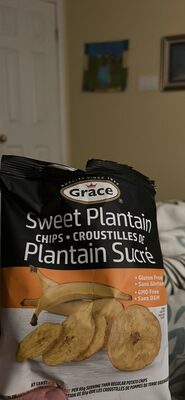 Sweet Plantain Chips, Sweet
500kcal
3.6Protein
21.4Fat
71.4Carbs
Sweet Plantain Chips, Sweet
500kcal
3.6Protein
21.4Fat
71.4Carbs