Romaine Hearts
Auto-generated content. This description was generated automatically and is pending editorial review. Inaccuracies are possible. Found a mistake? Contact us.
What it is
Romaine hearts are the inner, lighter-colored leaves of the romaine lettuce plant. They are typically harvested when the plant is younger and the leaves are more tender and sweet. The hearts are often sold together as a unit, providing a crisp texture and mild flavor.
Why it's used
Romaine hearts are primarily used as a fresh ingredient in salads and as a base for various salad preparations. They are valued for their crunch and ability to hold up well to dressings. They are commonly found in pre-packaged salads, wraps, and as a fresh vegetable component in meals.
Health notes
Romaine hearts are a whole food and are not subject to FDA additive regulations. They are a source of vitamins A and K, as well as folate and fiber. No major health concerns are associated with the consumption of romaine lettuce at typical dietary levels. International bodies like WHO/IARC have not specifically evaluated romaine hearts as a distinct food ingredient.
Allergen info
Romaine hearts are not a major allergen. They do not contain gluten.
Products containing Romaine Hearts
Compare products →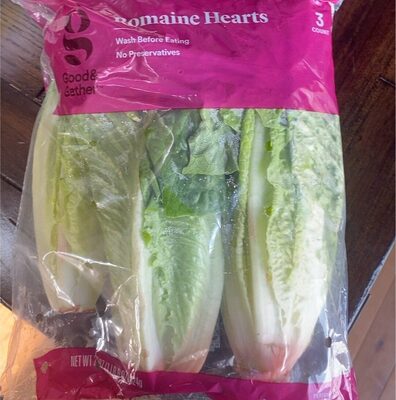 Target Stores
Romaine Hearts, Romaine
18kcal
1.2Protein
0Fat
3.7Carbs
Target Stores
Romaine Hearts, Romaine
18kcal
1.2Protein
0Fat
3.7Carbs
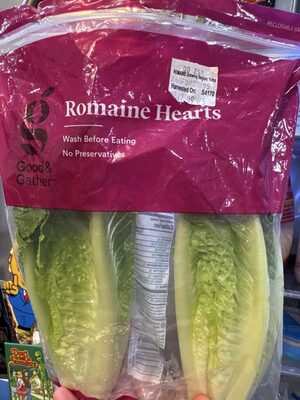 Target Stores
Romaine Hearts, Romaine
18kcal
1.2Protein
0Fat
3.5Carbs
Target Stores
Romaine Hearts, Romaine
18kcal
1.2Protein
0Fat
3.5Carbs