Saffron Rice: Basmati Rice
What is Saffron Rice: Basmati Rice?
Basmati rice is a type of aromatic, long-grain rice primarily cultivated in India and Pakistan. It is known for its distinct fragrance and fluffy texture when cooked. The rice grains are harvested, milled to remove the outer layers, and then packaged.
Is Saffron Rice: Basmati Rice vegan?
Saffron Rice: Basmati Rice is not animal-derived. Products that contain it can still include other animal-derived ingredients, so check the full ingredient list.
Is Saffron Rice: Basmati Rice gluten-free?
It is also naturally gluten-free.
Is Saffron Rice: Basmati Rice a major allergen?
Basmati rice is not one of the nine major FDA food allergens.
What is Saffron Rice: Basmati Rice used for?
Basmati rice serves as a staple carbohydrate in many cuisines, particularly South Asian dishes.
Is Saffron Rice: Basmati Rice safe?
Basmati rice is a whole food and is generally recognized as safe for consumption.
Why it's used
Basmati rice serves as a staple carbohydrate in many cuisines, particularly South Asian dishes. In packaged foods, it is frequently used as a base for ready-to-eat meals, often prepared with spices like saffron to create "saffron rice" for dishes such as curries and kormas.
Health notes
Basmati rice is a whole food and is generally recognized as safe for consumption. It is a source of carbohydrates, providing energy, and contains some dietary fiber, especially in its brown form. As a whole food, it does not have a specific regulatory status as a food additive by the FDA, nor has it been evaluated by JECFA or EFSA in that context.
Allergen info
Basmati rice is not one of the nine major FDA food allergens. It is also naturally gluten-free.
Foods that contain Saffron Rice: Basmati Rice
Compare products →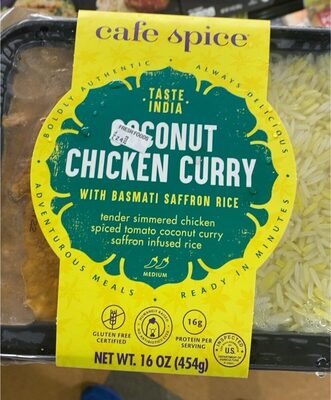 NOT A BRANDED ITEM
Coconut Chicken Curry With Saffron Rice, Medium
123kcal
10.1Protein
3.5Fat
11.9Carbs
Zaika Flavours Of India Inc.
Whole Planet, Cafe Spice, Saag Paneer With Saffron Rice
High in sodium — 23% DV per serving
75kcal
2.2Protein
1.8Fat
13.2Carbs
Zaika Flavours Of India Inc.
Whole Planet, Cafe Spice, Vegetable Korma With Saffron Rice
128kcal
2.2Protein
2.2Fat
25.1Carbs
NOT A BRANDED ITEM
Coconut Chicken Curry With Saffron Rice, Medium
123kcal
10.1Protein
3.5Fat
11.9Carbs
Zaika Flavours Of India Inc.
Whole Planet, Cafe Spice, Saag Paneer With Saffron Rice
High in sodium — 23% DV per serving
75kcal
2.2Protein
1.8Fat
13.2Carbs
Zaika Flavours Of India Inc.
Whole Planet, Cafe Spice, Vegetable Korma With Saffron Rice
128kcal
2.2Protein
2.2Fat
25.1Carbs
Learn more
Auto-generated content. This description was generated automatically and is pending editorial review. Inaccuracies are possible. Found a mistake? Contact us.