Salame Calabrese - Pork
What is Salame Calabrese - Pork?
Salame Calabrese is a spicy, dry-cured sausage originating from the Calabria region of Southern Italy. It is traditionally made from ground pork, seasoned with salt, black pepper, and a generous amount of Calabrian chili pepper, then fermented and air-dried.
Is Salame Calabrese - Pork vegan?
No. Salame Calabrese - Pork is animal-derived, so it is not vegan.
Is Salame Calabrese - Pork a major allergen?
Not a major allergen.
What is Salame Calabrese - Pork used for?
This ingredient is a finished food product, not an additive.
Is Salame Calabrese - Pork safe?
Salame Calabrese is a processed meat product.
Why it's used
This ingredient is a finished food product, not an additive. It is primarily used in charcuterie boards, sandwiches, pizzas, and antipasto platters. Manufacturers include it as a key component in packaged meat assortments for its distinctive flavor and texture.
Health notes
Salame Calabrese is a processed meat product. The International Agency for Research on Cancer (IARC), part of the World Health Organization (WHO), classifies processed meat as 'carcinogenic to humans' (Group 1), based on sufficient evidence that its consumption causes colorectal cancer. Like other cured meats, it typically contains high levels of sodium and saturated fat. The FDA Daily Value for sodium is 2,300 mg, and the 2025-2030 Dietary Guidelines for Americans recommend keeping saturated fat intake under 10% of daily calories. JECFA and EFSA do not typically evaluate finished food products like salami.
Allergen info
Not a major allergen.
Foods that contain Salame Calabrese - Pork
Compare products →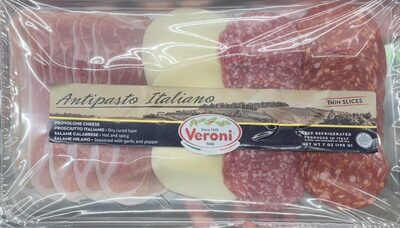 Provolone Cheese, Prosciutto Italiano, Salame Calabrese & Milano Antipasto Italiano
357kcal
25Protein
28.6Fat
3.6Carbs
Provolone Cheese, Salame Milano & Calabrese Antipasto Italiano
296kcal
30.4Protein
17.9Fat
1.8Carbs
Strasner's Bar-B-Que
Veroni Soppressata And Salame Calabrese, 6 Oz
High in sodium — 32% DV per serving
High in saturated fat — 20% DV per serving
330kcal
19.6Protein
25Fat
5.4Carbs
Veroni USA Inc.
Veroni Antipasto Italiano, 7 Oz
321kcal
28.6Protein
21.4Fat
0Carbs
Provolone Cheese, Prosciutto Italiano, Salame Calabrese & Milano Antipasto Italiano
357kcal
25Protein
28.6Fat
3.6Carbs
Provolone Cheese, Salame Milano & Calabrese Antipasto Italiano
296kcal
30.4Protein
17.9Fat
1.8Carbs
Strasner's Bar-B-Que
Veroni Soppressata And Salame Calabrese, 6 Oz
High in sodium — 32% DV per serving
High in saturated fat — 20% DV per serving
330kcal
19.6Protein
25Fat
5.4Carbs
Veroni USA Inc.
Veroni Antipasto Italiano, 7 Oz
321kcal
28.6Protein
21.4Fat
0Carbs
Learn more
Auto-generated content. This description was generated automatically and is pending editorial review. Inaccuracies are possible. Found a mistake? Contact us.