Salame Milano
What is Salame Milano?
Salame Milano is a type of dry-cured Italian salami, originating from the Milan region. It is typically made from finely ground pork, seasoned with salt, pepper, and sometimes garlic, then fermented and air-dried for several months. The result is a firm, richly flavored sausage.
Is Salame Milano vegan?
No. Salame Milano is animal-derived, so it is not vegan.
Is Salame Milano gluten-free?
It does not contain gluten unless added during processing.
Is Salame Milano a major allergen?
Salame Milano is not a major allergen.
What is Salame Milano used for?
Salame Milano is often sliced thinly and served as part of charcuterie boards, antipasto platters, or in sandwiches.
Is Salame Milano safe?
Salame Milano is a processed meat product.
Why it's used
Salame Milano is often sliced thinly and served as part of charcuterie boards, antipasto platters, or in sandwiches. Manufacturers use it as a flavorful meat component in packaged snack items and ready-to-eat meals. Its savory taste and firm texture make it a popular choice for consumers seeking cured meat products.
Health notes
Salame Milano is a processed meat product. The 2025-2030 Dietary Guidelines for Americans recommend limiting intake of processed meats due to their sodium and saturated fat content. The World Health Organization (WHO) has classified processed meat as a Group 1 carcinogen, meaning there is sufficient evidence that it causes cancer in humans, primarily linked to colorectal cancer. High sodium intake is associated with increased blood pressure, and saturated fat can raise LDL cholesterol levels.
Allergen info
Salame Milano is not a major allergen. It does not contain gluten unless added during processing.
Foods that contain Salame Milano
Compare products →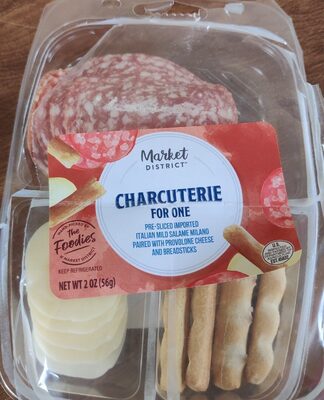 Giant Eagle, Inc.
Charcuterie Pre-Sliced Imported Italian Mild Salame Milano Paired With Provolone Cheese And Breadsticks, Charcuterie
High in sodium — 28% DV per serving
High in saturated fat — 25% DV per serving
357kcal
23.2Protein
19.6Fat
19.6Carbs
Giant Eagle, Inc.
Salami Salame Toscano With Fennel Seeds, Hot & Spicy Salame Calabrese, Salame Milano With Garlic And Pepper Trio, Salami
High in sodium — 21% DV per serving
357kcal
28.6Protein
25Fat
3.6Carbs
Giant Eagle, Inc.
Charcuterie For One Pre-Sliced Imported Italian Mild Salame Milano Paired With Provolone Cheese And Dried Cranberries, Charcuterie
High in saturated fat — 20% DV per serving
High in added sugars — 28% DV per serving
321kcal
16.1Protein
14.3Fat
33.9Carbs
Giant Eagle, Inc.
Charcuterie Pre-Sliced Imported Italian Mild Salame Milano Paired With Provolone Cheese And Breadsticks, Charcuterie
High in sodium — 28% DV per serving
High in saturated fat — 25% DV per serving
357kcal
23.2Protein
19.6Fat
19.6Carbs
Giant Eagle, Inc.
Salami Salame Toscano With Fennel Seeds, Hot & Spicy Salame Calabrese, Salame Milano With Garlic And Pepper Trio, Salami
High in sodium — 21% DV per serving
357kcal
28.6Protein
25Fat
3.6Carbs
Giant Eagle, Inc.
Charcuterie For One Pre-Sliced Imported Italian Mild Salame Milano Paired With Provolone Cheese And Dried Cranberries, Charcuterie
High in saturated fat — 20% DV per serving
High in added sugars — 28% DV per serving
321kcal
16.1Protein
14.3Fat
33.9Carbs
Learn more
Auto-generated content. This description was generated automatically and is pending editorial review. Inaccuracies are possible. Found a mistake? Contact us.