Sea Salt And Enzymes
Auto-generated content. This description was generated automatically and is pending editorial review. Inaccuracies are possible. Found a mistake? Contact us.
What it is
Sea salt is produced by evaporating seawater, consisting mainly of sodium chloride along with trace minerals. Enzymes are proteins that act as catalysts, speeding up specific chemical reactions, and are often sourced from microorganisms, plants, or animals for food use.
Why it's used
Sea salt is widely used to enhance flavor and as a natural preservative in many foods. Enzymes are added for various functional purposes, such as breaking down proteins or starches, improving texture, or assisting in processes like cheese production.
Health notes
The FDA recognizes salt as Generally Recognized As Safe (GRAS). High sodium intake is associated with elevated blood pressure; the FDA Daily Value for sodium is 2,300 mg. Many enzymes used in food are also considered GRAS by the FDA or are approved food additives. JECFA and EFSA have evaluated various specific enzymes and generally consider them safe for their intended uses.
Allergen info
Neither sea salt nor enzymes are classified as major allergens. However, some enzymes can be derived from major allergen sources, which would require declaration if present in the final product.
Products containing Sea Salt And Enzymes
Compare products →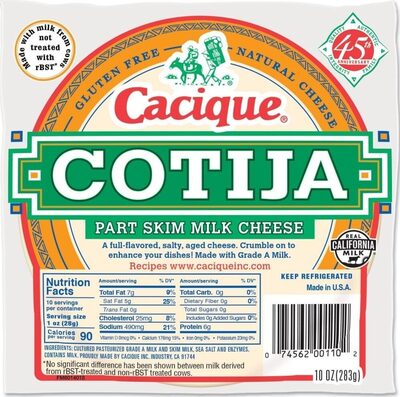 Cacique Inc.
Cotija Part Skim Milk Cheese
High in saturated fat — 25% DV per serving
357kcal
25Protein
28.6Fat
0Carbs
Cacique Inc.
Cotija Part Skim Milk Cheese
High in saturated fat — 25% DV per serving
357kcal
25Protein
28.6Fat
0Carbs
 Cacique Inc.
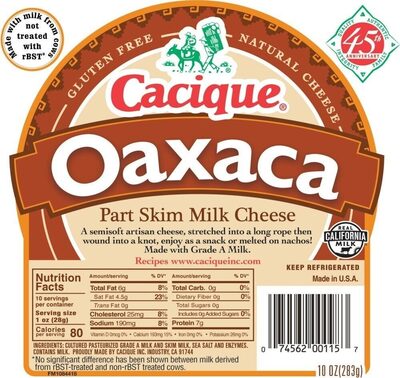
Oaxaca Part Skim Milk Cheese
High in saturated fat — 20% DV per serving
286kcal
25Protein
21.4Fat
0Carbs
Cacique Inc.
Oaxaca Part Skim Milk Cheese
High in saturated fat — 20% DV per serving
286kcal
25Protein
21.4Fat
0Carbs