Sweet Soppressata
What is Sweet Soppressata?
Sweet soppressata is a type of dry-cured salami made from pork. It is typically seasoned with spices, ground, stuffed into casings, and then air-dried to develop its characteristic flavor and texture. The term 'sweet' indicates a mild spice profile, without added heat.
Is Sweet Soppressata vegan?
No. Sweet Soppressata is animal-derived, so it is not vegan.
Is Sweet Soppressata a major allergen?
Pork is not considered one of the nine major food allergens identified by the FDA.
What is Sweet Soppressata used for?
Sweet soppressata is primarily used as a flavorful component in various dishes and snacks.
Is Sweet Soppressata safe?
Sweet soppressata, like other cured meats, is regulated by the FDA.
Why it's used
Sweet soppressata is primarily used as a flavorful component in various dishes and snacks. It is commonly sliced thin and served on charcuterie boards, in sandwiches, or paired with cheese.
Health notes
Sweet soppressata, like other cured meats, is regulated by the FDA. It typically contains sodium and saturated fat; the Dietary Guidelines for Americans (2025-2030) recommend limiting saturated fat to under 10% of daily calories, and the FDA Daily Value for sodium is 2,300 mg. The International Agency for Research on Cancer (IARC) classifies processed meat, which includes products like soppressata, as Group 1 (carcinogenic to humans) based on sufficient evidence that it causes colorectal cancer.
Allergen info
Pork is not considered one of the nine major food allergens identified by the FDA. Not a major allergen.
Foods that contain Sweet Soppressata
Compare products →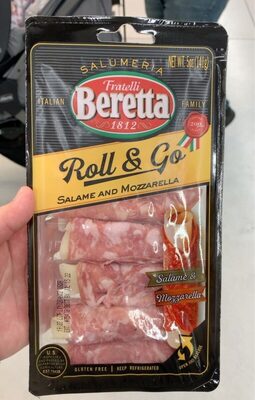 Fratelli Beretta, Usa, Inc.
Salame And Mozzarella Roll & Go, Salame And Mozzarella
High in sodium — 30% DV per serving
High in saturated fat — 25% DV per serving
304kcal
26.8Protein
21.4Fat
1.8Carbs
Fratelli Beretta, Usa, Inc.
Salame And Mozzarella Roll & Go, Salame And Mozzarella
High in sodium — 30% DV per serving
High in saturated fat — 25% DV per serving
304kcal
26.8Protein
21.4Fat
1.8Carbs
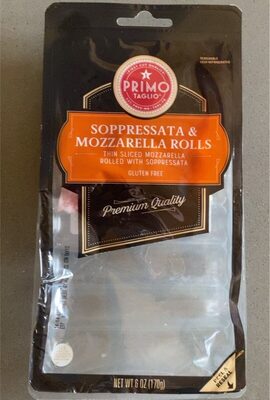 Safeway, Inc.
Soppressata & Mozzarella Rolls, Soppressata & Mozzarella
304kcal
25Protein
23.2Fat
1.8Carbs
Safeway, Inc.
Soppressata & Mozzarella Rolls, Soppressata & Mozzarella
304kcal
25Protein
23.2Fat
1.8Carbs
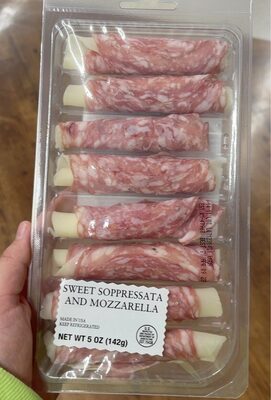 Fratelli Beretta, Usa, Inc.
Roll & Go Sweet Soppressata And Mozzarella, 5 Oz
High in sodium — 30% DV per serving
High in saturated fat — 25% DV per serving
298kcal
26.3Protein
21.1Fat
1.8Carbs
Fratelli Beretta, Usa, Inc.
Salame And Provolone Roll & Go, Salame And Provolone
High in sodium — 30% DV per serving
High in saturated fat — 25% DV per serving
304kcal
26.8Protein
21.4Fat
1.8Carbs
Fratelli Beretta, Usa, Inc.
Roll & Go Sweet Soppressata And Mozzarella, 5 Oz
High in sodium — 30% DV per serving
High in saturated fat — 25% DV per serving
298kcal
26.3Protein
21.1Fat
1.8Carbs
Fratelli Beretta, Usa, Inc.
Salame And Provolone Roll & Go, Salame And Provolone
High in sodium — 30% DV per serving
High in saturated fat — 25% DV per serving
304kcal
26.8Protein
21.4Fat
1.8Carbs
Learn more
Auto-generated content. This description was generated automatically and is pending editorial review. Inaccuracies are possible. Found a mistake? Contact us.