Unbleached And Unbromated
Auto-generated content. This description was generated automatically and is pending editorial review. Inaccuracies are possible. Found a mistake? Contact us.
What it is
"Unbleached and unbromated" describes flour, most commonly wheat flour, that has not been treated with chemical bleaching agents (such as benzoyl peroxide or chlorine gas) or with potassium bromate. Bleaching agents are sometimes used to whiten flour and speed up its aging process, while potassium bromate acts as a dough conditioner.
Why it's used
This type of flour is a foundational ingredient in a wide variety of baked goods, including cakes, cookies, breads, and pastries. Manufacturers choose unbleached flour for its slightly off-white color and natural flavor, and unbromated flour to avoid the use of potassium bromate as a dough conditioner.
Health notes
In the US, the FDA permits the use of various bleaching agents in flour and also permits potassium bromate as a food additive. However, "unbromated" flour is specifically chosen to avoid potassium bromate. JECFA has evaluated potassium bromate and concluded it is not appropriate as a flour treatment agent. While the FDA still permits its use, California will ban potassium bromate in food products starting in 2027. There are mixed views on the health effects of potassium bromate, with some studies suggesting potential carcinogenicity, which has led to its ban in many countries.
Allergen info
This ingredient is typically derived from wheat, which is one of the nine major food allergens identified by the FDA.
Products containing Unbleached And Unbromated
Compare products →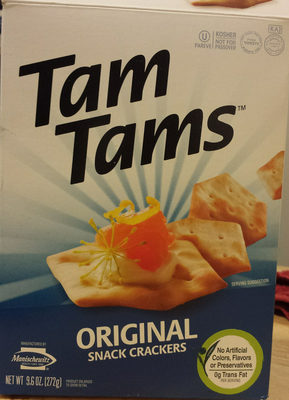 R.A.B. Food Group, LLC
Snack Crackers, Original
367kcal
6.7Protein
13.3Fat
53.3Carbs
R.A.B. Food Group, LLC
Snack Crackers, Original
367kcal
6.7Protein
13.3Fat
53.3Carbs